
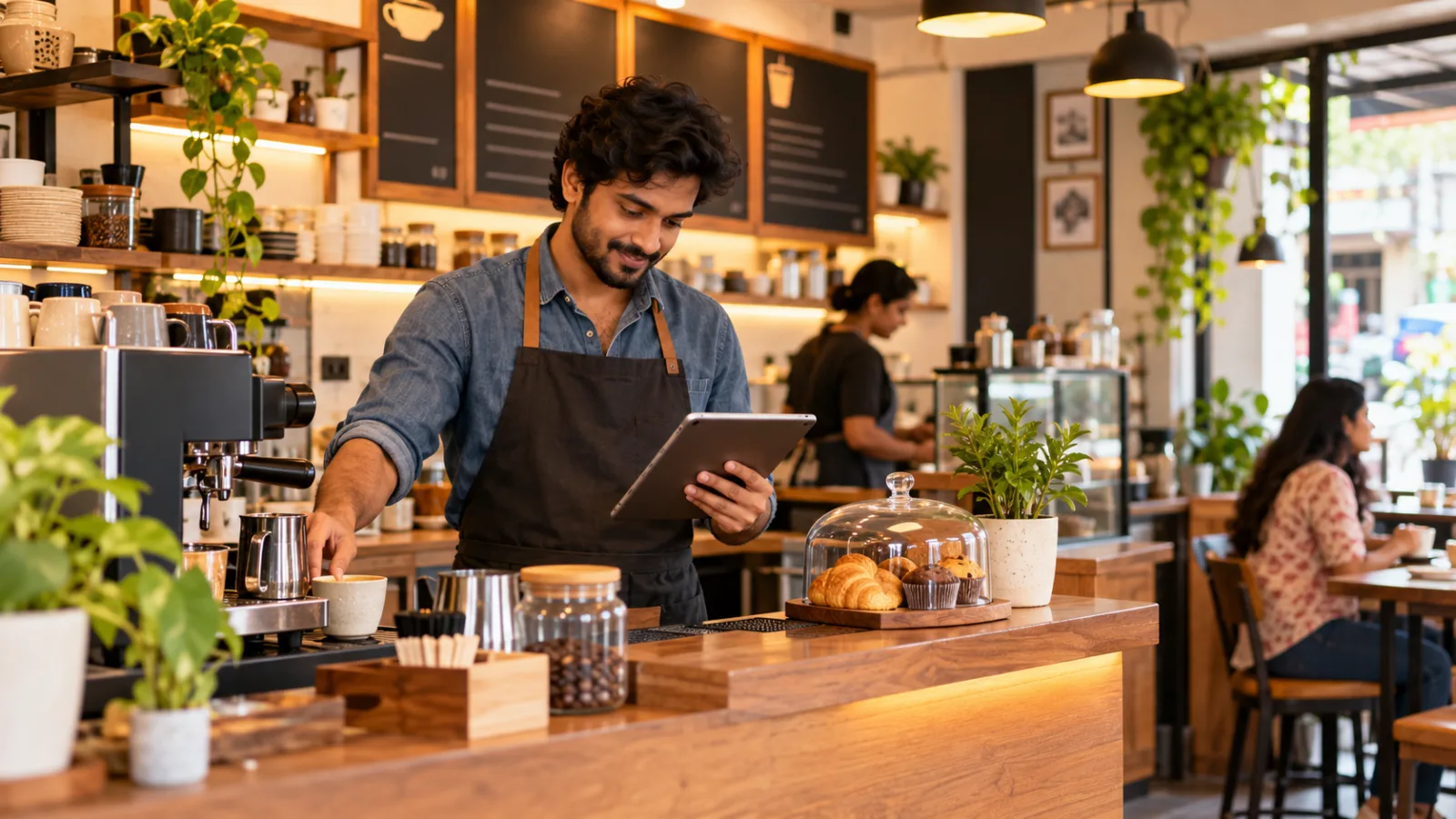
कम Budget में Café कैसे खोलें? India के लिए Cost, Licence और Profit Plan 2026
India में कम budget café खोलने की detailed Hindi guide: concept, location test, setup budget, FSSAI, menu costing, equipment, break-even, marketing और 30-day launch plan।
कम budget में café खोलना संभव है, लेकिन “सुंदर interior + बड़ा menu + expensive machine” से शुरुआत करना अक्सर cash-flow पर दबाव डालता है। Profitable café पहले एक repeatable food-and-beverage operation होता है और बाद में décor destination बनता है। सही तरीका है: छोटा format चुनें, demand test करें, limited menu cost करें, food-safety workflow बनाएं और fixed cost को daily sales capacity से match करें।
यह guide India में kiosk, takeaway counter, neighbourhood coffee shop या compact café plan करने वालों के लिए है। यहां दिए budget examples केवल planning illustrations हैं—city, rent, deposit, condition of premises, equipment, menu और local approvals के अनुसार actual cost बदल सकती है। Existing outlet की sales बढ़ाने के लिए Restaurant Sales Growth Guide पढ़ें।
सबसे पहले café format चुनें
| Format | Best for | Main cost pressure |
|---|---|---|
| Home/pre-order kitchen | Demand test, beverages/snacks on order | Packaging, delivery, permissible residential use |
| Cart or mobile counter | Tea, coffee and limited fast-moving items | Local vending permission, water, storage and weather |
| Takeaway kiosk | Office, college or transit footfall | Rent per square foot and peak-hour speed |
| Micro café | 6–15 seats and neighbourhood repeat customers | Deposit, interiors, utilities and staff |
| Shared-space counter | Inside coworking, store, campus or food court | Revenue share, operating restrictions and common charges |
| Full dine-in café | Experience-led destination | High capex, rent, staffing and slower table turnover |
Low-budget founder के लिए takeaway kiosk, shared counter या micro café अक्सर easier pilot है। Format target customer के buying occasion से चुनें: morning commuters speed चाहते हैं, students affordable combos, office buyers predictable service और neighbourhood customers comfort तथा consistency।
Step 1: 7-day demand test करें
Lease sign करने से पहले proposed area को seven-day observation sheet से test करें। Weekday और weekend दोनों cover करें।
- Morning, lunch, evening और late-evening footfall count
- कितने लोग nearby beverages/snacks खरीद रहे हैं?
- Competitor का price range, queue time और busiest products
- Students, office staff, families, delivery riders या transit users का mix
- Parking, walkability, visibility और safe access
- Water, drainage, electricity load, ventilation and waste access
- Monsoon/heat में footfall और frontage का effect
- Delivery radius में residential/office demand
Broker की “बहुत crowd है” statement पर निर्णय न लें। Count करें कि relevant buying traffic कितना है और उस traffic का कितने प्रतिशत realistically convert हो सकता है।
Location scorecard
| Factor | Weight | Question |
|---|---|---|
| Relevant footfall | 25% | क्या target customer सही समय पर यहां आता है? |
| Rent and deposit | 20% | क्या conservative sales पर occupancy affordable है? |
| Visibility/access | 15% | क्या outlet दिखता और safely enter किया जा सकता है? |
| Utilities | 15% | Water, load, drainage, exhaust और storage workable हैं? |
| Competition gap | 10% | क्या unmet need है या केवल price war होगा? |
| Delivery suitability | 10% | Packaging और travel time menu को support करते हैं? |
| Permissions | 5% | Use, signage, fire and food operations permitted हैं? |
Low rent लेकिन poor drainage, inadequate power या hidden frontage वाला outlet बाद में expensive हो सकता है। Written landlord permission, lock-in, escalation, repairs, signage rights, exhaust route और deposit refund terms पढ़ें।
Neighbourhood customer interviews करें
Footfall count के साथ 20–30 short interviews assumptions को जल्दी expose कर सकते हैं। Respondent को concept बेचने की जगह behaviour पूछें:
- आप अभी coffee, tea या snack कहां से खरीदते हैं?
- किस time और किस purpose से खरीदते हैं—commute, meeting, study या leisure?
- Last purchase में क्या लिया और total bill कितना था?
- Current options में सबसे बड़ी friction क्या है—price, waiting, seating, hygiene या taste?
- Takeaway, dine-in और delivery में कौन-सा format prefer करते हैं?
“क्या आप हमारा café visit करेंगे?” जैसे hypothetical question पर भरोसा न करें। Recent purchase behaviour, actual price paid और frequency ज्यादा useful evidence हैं।
Lease से पहले 18-month P&L बनाएं
Monthly spreadsheet में कम से कम तीन scenarios रखें: conservative, base और stretch. प्रत्येक में bills/day, average bill, channel mix, food/packaging cost, payroll, rent, utilities, fees, marketing, repairs, tax and owner salary अलग रखें।
| Stress test | Question |
|---|---|
| Sales delay | अगर expected footfall 3–6 months late आए तो cash कितने दिन चलेगा? |
| Rent burden | Conservative sales पर rent/common charges sustainable हैं? |
| Input inflation | Milk, coffee, oil या packaging बढ़ने पर contribution कितना बचेगा? |
| Staff gap | Absence या replacement training में service कैसे चलेगी? |
| Equipment failure | Repair, rental backup और lost sales का buffer है? |
| Seasonality | Rain, summer, exams, holidays या office attendance demand कैसे बदलेंगे? |
Rent-to-sales percentage एक diagnostic है, universal rule नहीं। City, format, channel mix और gross contribution के अनुसार acceptable occupancy बदलती है; lease decision conservative cash-flow से लें।
Step 2: Café budget को buckets में divide करें
| Budget bucket | Typical items | Low-cost approach |
|---|---|---|
| Premises | Deposit, advance, brokerage, legal documentation | Smaller area, secondary lane near demand, negotiated fit-out period |
| Fit-out | Counter, plumbing, electrical, exhaust, paint, signage | Food-safe functional surfaces; decorative civil work limit करें |
| Equipment | Brewing, refrigeration, cooking, washing, filtration | Menu-led priority list; tested used equipment where safe |
| Compliance | Registration/licence, professional help, local approvals | Official portals और city-specific checklist |
| Opening stock | Ingredients, packaging, cleaning and consumables | Small par levels; fast replenishment |
| Technology | Billing, inventory, QR/menu, internet, printer | Simple system with export and item-level sales |
| Launch | Photography, local promotion, sampling | Own content, neighbourhood partnerships, limited samples |
| Working capital | Rent, payroll, utilities and replenishment | Ring-fenced runway; décor में use न करें |
Opening budget और survival budget अलग रखें। Equipment खरीदकर bank balance zero करना dangerous है। Delayed launch, slow first month, repair और deposit जैसी surprises के लिए contingency रखें।
Illustrative low-budget setup model
नीचे percentages planning framework हैं, market quotation नहीं:
- 20–30%: Deposit and premises readiness
- 20–30%: Essential equipment and refrigeration
- 10–18%: Functional fit-out, water, electrical and signage
- 5–10%: Furniture, smallwares and serving tools
- 4–8%: Opening ingredients, packaging and cleaning stock
- 2–5%: Licences, professional/document costs and technology
- 20–30%: Working-capital and contingency reserve
One-size-fits-all rupee figure misleading हो सकती है। पहले तीन local quotations लें, electrical/plumbing site inspection करवाएं और “included” items लिखित में लें।
Step 3: Limited menu से शुरुआत करें
Large menu ज्यादा sales की guarantee नहीं; यह more ingredients, waste, training complexity और slow service ला सकता है। Launch menu को three layers में रखें:
- Hero items: 3–5 products जिनके लिए café याद रखा जाए
- Reliable add-ons: 4–6 snacks/desserts with shared ingredients
- Simple combos: Beverage + food combinations that improve average bill
एक ingredient कई items में responsibly use हो तो purchase volume और waste control बेहतर हो सकता है। लेकिन allergens, vegetarian/non-vegetarian separation, shelf life और cross-contamination controls compromise न करें।
हर menu item की true cost निकालें
Portion cost = ingredients + cooking loss/yield + garnish + packaging + condiment + payment/delivery allocation + wastage allowance
| Item | What to record |
|---|---|
| Recipe quantity | Grams/ml per serving, not “one spoon” |
| Purchase cost | Net usable quantity after tax/freight where relevant |
| Yield | Trim, cooking, spillage and spoilage |
| Packaging | Cup, lid, sleeve, box, tissue and carry bag |
| Channel cost | Payment, discount, aggregator and promotion economics |
| Selling price | Tax treatment, dine-in/takeaway and displayed price |
Ingredient price बदलने पर recipe sheet update करें। Best seller high-revenue हो सकता है लेकिन low-contribution; item-level margin और preparation time दोनों देखें।
Menu engineering matrix
| Popularity | Contribution | Action |
|---|---|---|
| High | High | Promote, keep consistent and protect availability |
| High | Low | Portion, input cost, price or combo review |
| Low | High | Rename, reposition, photograph or staff-recommend |
| Low | Low | Remove, redesign or run only as limited special |
Step 4: Equipment menu के बाद खरीदें
पहले equipment और बाद में menu चुनना उल्टा क्रम है। Priority list बनाएं:
Must-have
- Chosen beverage process के लिए reliable brewing equipment
- Required refrigeration with temperature monitoring
- Food-safe worktable, storage and washing arrangement
- Water filtration where product/equipment needs it
- Fire/electrical safety equipment as applicable
- Accurate weighing, timers, thermometers and smallwares
Can wait
- Rarely used single-purpose appliances
- Oversized display cabinet before demand is proven
- Premium décor lights and custom furniture
- Multiple machines without peak-hour capacity need
Used equipment लेने से पहले service history, electrical load, spare availability, leaks, temperature recovery, warranty और food-contact condition inspect करें। Cheap equipment जो बार-बार बंद हो, वह lost sales और safety risk बन सकता है।
Equipment specification: brand से पहले capacity
| Decision | What to calculate |
|---|---|
| Peak throughput | Busiest 15/30 minutes में expected drinks और milk-based drink share |
| Recovery | Continuous brewing/steaming के बाद temperature and pressure recovery |
| Grinder capacity | Peak doses, adjustment repeatability, retention and cleaning access |
| Electrical | Connected load, phase, socket, earthing, stabilisation and backup limits |
| Water | Inlet pressure, tested quality, filtration specification and drain path |
| Counter | Machine dimensions, ventilation, service clearance and safe lifting access |
| After-sales | Local technician, parts lead time, response commitment and warranty exclusions |
Home-use machine attractive entry price दे सकती है, लेकिन commercial duty cycle, recovery, warranty and service requirements अलग होते हैं। Purchase से पहले daily volume और peak load manufacturer/supplier को लिखित दें और commercial-use suitability confirm करें। Grinder को leftover budget item न बनाएं; inconsistent grinding product quality, shot time और queue speed तीनों प्रभावित कर सकती है।
Water, power और drainage pre-construction audit
Machine delivery के बाद utility problem discover करना expensive rework बनता है। Civil work से पहले equipment layout और manufacturer specifications के साथ audit करें:
- Water: Source test, potable status, hardness/mineral profile, inlet pressure, filter capacity, replacement interval and isolation valve
- Drainage: Floor slope, trapped drain, backflow protection, machine drain and cleaning-water route
- Power: Total connected load, simultaneous peak, dedicated circuits, earthing, surge/voltage protection and safe shutdown
- Heat: Ventilation, refrigeration clearance and working temperature around staff/equipment
- Gas/fuel: Applicable storage, ventilation, detection and local fire requirements
- Service access: Technician machine खोल सके; filter, pump और drain reachable रहें
One generic filter सभी locations के लिए सही नहीं होता। Water report और equipment-maker specification के आधार पर treatment चुनें; filter cartridges और testing को recurring operating cost मानें।
Coffee bar workflow को construction से पहले simulate करें
Counter का काम photos में अच्छा दिखना नहीं, safe forward flow बनाना है। Menu के top drinks के लिए physical sequence map करें:
- Order receipt and cup selection
- Grinding/dosing and espresso preparation
- Milk/cold ingredient retrieval
- Assembly, garnish and lid
- Handoff, used-tool return and cleaning
Floor tape/cardboard mock-up पर machine, grinder, fridge, sink, knock box, waste, cups and handoff mark करें। Two staff के साथ 10–20 mixed mock orders चलाएं और unnecessary step, crossing, reaching, queue blockage तथा dirty/clean path conflict record करें। Layout freeze करने से पहले adjustment बहुत सस्ता होता है।
Bar zones और hygiene separation
| Zone | Key design question |
|---|---|
| Order/payment | Queue production और pickup को block तो नहीं करती? |
| Hot beverage | Grinder, machine, milk and tools safe reach में हैं? |
| Cold assembly | Ice/cold ingredients protected and temperature-controlled हैं? |
| Food preparation | Allergen and raw/ready-to-eat cross-contact controlled है? |
| Handoff | Order identification clear है और drinks वापस production path cross नहीं करतीं? |
| Wash/waste | Dirty items clean cups/ingredients के रास्ते से अलग हैं? |
Equipment commissioning checklist
- Model, serial number, invoice, warranty and manuals recorded
- Installation authorised technician ने specification के अनुसार की
- Electrical load, earthing, inlet pressure and drain tested
- Water-treatment settings and replacement date documented
- Machine heated load पर leak, recovery and safety test pass करती है
- Refrigeration temperature pull-down and door seals verified
- Staff को operation, cleaning, shutdown and fault escalation training मिली
- Cleaning chemicals, tools and food-contact instructions available हैं
- Service contact, expected response and critical spare plan written है
Preventive maintenance calendar
| Frequency | Examples |
|---|---|
| Every shift/day | Food-contact cleaning, group/steam-tool cleaning as specified, fridge/temp check, leak and abnormal-noise observation |
| Weekly | Grinder/chute and removable parts per manual, seals, drain flow, inventory of cleaning supplies |
| Monthly | Water/filter readings, preventive inspection, calibration trend and deep-clean records |
| Scheduled professional service | Manufacturer/provider interval based on usage, water and warranty conditions |
Calendar generic starting point है; manufacturer manual और qualified technician instructions override करें। Descaling या disassembly untrained staff से कराने पर damage, injury या warranty issue हो सकता है।
Shared prep kitchen कब useful है?
यदि outlet में expensive oven, bulk preparation या storage की जरूरत केवल कुछ hours है, compliant shared commercial kitchen capex कम कर सकती है। लेकिन केवल rent saving देखकर निर्णय न लें:
- Facility का applicable FSSAI status और आपके activity coverage verify करें
- Transport time, temperature control और tamper-safe containers plan करें
- Allergen/cross-contamination separation लिखित रखें
- Prep slot, cleaning, storage, breakage और utility charges contract में देखें
- Traceability तय करें—कौन-सा batch कहां और कब बना?
- Shared kitchen unavailable हो तो backup production plan रखें
Outsourced bakery or ready components भी complexity घटा सकते हैं, पर supplier approval, ingredient/allergen information, shelf life, cold chain और consistency की जिम्मेदारी खत्म नहीं होती।
Step 5: India में registrations और licences
Exact approvals state, municipal area, premises, seating, fuel, signage, music, employees और operating hours के अनुसार बदलते हैं। Common checklist:
- Business constitution, PAN and bank setup
- FSSAI Registration or appropriate State/Central Licence through FoSCoS
- Local shop/trade/eating-house permissions where applicable
- GST registration/tax treatment when applicable
- Fire safety/NOC requirements based on premises and local rules
- Shops and Establishments/labour compliance where applicable
- Signage, outdoor seating, waste, pollution or music permissions where applicable
- Legal Metrology compliance for packaged/pre-packed goods where applicable
- Udyam registration if eligible and useful
FSSAI states that every Food Business Operator must be licensed or registered. FoSCoS eligibility currently shows restaurant turnover up to ₹12 lakh under Registration, above that and up to ₹20 crore under State Licence, and above ₹20 crore under Central Licence; business type and other criteria can affect eligibility, so use the live eligibility tool before applying. Udyam registration on the official government portal is free, paperless and based on self-declaration.
GST registration and restaurant-service rate depend on current law, turnover, state/category and premises facts. Do not build pricing from a blog screenshot; verify on GST/CBIC resources or with a qualified tax professional.
Food safety को opening-day feature बनाएं
- Approved suppliers and inward quality checks
- Date labels, FIFO/FEFO and discard rules
- Cold/hot holding temperature records where relevant
- Separate cleaning chemicals and food storage
- Hand-wash, personal hygiene and illness reporting
- Allergen awareness and cross-contact controls
- Filtered/potable water and ice safety
- Pest prevention and waste removal
- Opening, closing and deep-clean schedules
FSSAI inspection checklists Schedule 4 hygiene requirements पर आधारित हैं। इन्हें opening से पहले self-audit की तरह use करें। Applicable FoSTaC training और food-safety supervision requirements भी verify करें।
Step 6: Break-even calculate करें
Monthly break-even sales = monthly fixed costs ÷ contribution margin ratio
Daily bills needed = monthly break-even sales ÷ operating days ÷ average bill value
Illustration: अगर monthly fixed costs ₹1,20,000 और contribution margin ratio 60% है, तो break-even sales ₹2,00,000 होंगी। 30 operating days और ₹200 average bill पर लगभग 34 bills/day चाहिए। यह simplified illustration है; tax, owner salary, depreciation, loan interest, delivery mix, spoilage और seasonality अलग model करें।
Fixed और variable cost map
| Fixed/semi-fixed | Variable/channel-linked |
|---|---|
| Rent and common charges | Ingredients and packaging |
| Base payroll and statutory cost | Payment and aggregator charges |
| Software/internet | Discounts and commissions |
| Minimum utilities | Gas/electricity linked to volume |
| Maintenance contracts | Wastage and refunds |
| Owner salary/finance cost | Delivery-specific consumables |
Owner salary को zero मानकर “profit” न दिखाएं। Equipment replacement, tax and working-capital need भी cash-flow forecast में रखें।
Step 7: Lean staffing और standard operating procedures
Low-budget café में founder अक्सर purchasing, cashier, marketing और quality roles एक साथ करता है। इसे permanent dependency न बनाएं। प्रत्येक task के लिए simple SOP बनाएं:
- Recipe card and portion standard
- Opening/closing checklist
- Cash and digital payment reconciliation
- Stock receive, storage and issue
- Temperature and cleaning logs
- Complaint, refund and remake policy
- Equipment shutdown and emergency contacts
- Daily waste and variance report
Cross-training useful है, लेकिन food safety, cash control और working hours compromise न करें। Peak demand के लिए part-time/shift model applicable labour rules के भीतर plan करें।
Training को opening-week event न बनाएं
| Cadence | Training focus |
|---|---|
| Before opening | Food safety, recipes, equipment, hospitality, billing, cleaning and emergencies |
| Daily huddle | Out-of-stock items, reservations/events, one quality focus and responsibilities |
| Weekly | One observed drink/order workflow, waste review and customer issue |
| Monthly | Recipe calibration, safety refresh, maintenance and role cross-training |
| After incident | Root cause and process correction—not केवल individual blame |
Competency sign-off रखें: staff member कौन-सा equipment independently operate/clean कर सकता है, कौन cash close कर सकता है और कौन food-safety log verify करेगा।
Step 8: Inventory control
- Top 20 high-value/fast-moving ingredients daily count करें
- Par level = expected use during lead time + safety stock
- Purchase unit और recipe unit का conversion standard रखें
- Waste को expiry, preparation, spill, remake and staff meal में classify करें
- Physical stock को billing sales से weekly reconcile करें
- Supplier price and fill-rate history रखें
Discounted bulk purchase तभी saving है जब item shelf life के भीतर बिके। Dead stock cash और storage दोनों block करता है।
Step 9: Opening से पहले marketing
- Accurate Google Business Profile बनाएं; opening date, hours, category and location तैयार रखें
- Construction progress और menu testing का genuine social content publish करें
- Nearby offices, hostels, gyms, colleges or shops से appropriate local partnerships करें
- Invite-only soft launch में queue, recipe, billing and service test करें
- Opening offer को unit economics से cap करें; permanent discount expectation न बनाएं
- Customer consent से review request करें; incentive-based misleading reviews avoid करें
Local search setup के लिए Google Business Profile Ranking Guide और first-customer system के लिए First 100 Customers Guide उपयोगी हैं।
Dine-in, takeaway और delivery economics अलग रखें
| Channel | Track separately |
|---|---|
| Dine-in | Seats, table time, average bill, service and cleaning load |
| Takeaway | Queue time, packaging, order accuracy and pickup space |
| Own ordering | Payment, delivery arrangement, repeat rate and consent |
| Aggregator | Commission/fees, discount share, ads, packaging, cancellations and settlement |
एक ही selling price सभी channels पर same net contribution नहीं देता। Channel-wise P&L बनाएं और menu availability travel quality के अनुसार रखें। Zomato-focused optimisation के लिए Low-Cost Zomato Sales Guide देखें।
Pre-opening readiness audit
| Area | Pass condition |
|---|---|
| Compliance | Required approvals active/displayed and conditions understood |
| Food safety | Water, temperature, cleaning, pest, allergen and supplier records ready |
| Utilities | Peak-load power, water, drain, ventilation and safe shutdown tested |
| Equipment | Commissioned, staff-trained, service contacts and spares documented |
| Menu | Every item recipe-costed, timed, photographed/labelled where needed and available |
| People | Shift roles, attendance backup, emergency and incident escalation clear |
| Payments | Cash, UPI/card, refund, settlement and offline fallback tested |
| Service | Mock rush completed with order accuracy and handoff checks |
| Recovery | Fridge/grinder/POS failure and stock-out response rehearsed |
Soft launch को marketing event नहीं, controlled test मानें। Realistic mixed orders चलाएं; bottleneck, remake, waste, queue time और cleaning reset record करके public launch से पहले correct करें।
Indicative 8-week café launch plan
| Period | Actions |
|---|---|
| Weeks 1–2 | Concept, interviews, seven-day location study, competitor bills, 18-month P&L and decision gates |
| Weeks 3–4 | Premises due diligence, lease review, licence applications, utility design and menu trials |
| Week 5 | Supplier comparison, recipe costing, equipment inspection and opening-stock plan |
| Week 6 | Fit-out completion, SOPs, hiring, food-safety training and billing/inventory setup |
| Week 7 | Internal trials and controlled soft launch; speed, waste, temperature and feedback measurement |
| Week 8 | Required approvals confirmed, corrected menu/process and controlled public launch |
यह schedule operational planning example है, approval promise नहीं। Premises work और government/local processing longer हो तो opening date आगे बढ़ाएं; required approval के बिना operate न करें।
Daily café dashboard
- Net sales and bill count by channel
- Average bill value and items per bill
- Top/bottom products and contribution
- Ingredient purchases, closing stock and waste
- Labour hours and peak-hour throughput
- Discounts, refunds, remakes and cancellations
- Customer complaints and repeat signals
- Cash/digital reconciliation difference
Essential supplier scorecard
| Supplier | Beyond price, track this |
|---|---|
| Coffee/tea | Batch date, taste consistency, lead time, training and replacement policy |
| Dairy/alternatives | Cold-chain evidence, expiry, morning delivery and shortage handling |
| Bakery/prepared food | Ingredient/allergen data, batch traceability, shelf life and returns |
| Fresh ingredients | Usable yield, grading, seasonality and rejection process |
| Packaging | Leak/heat test, food-contact suitability, MOQ and print lead time |
| Equipment service | Response time, parts availability, visit charge and backup option |
| Payments/POS | Settlement reconciliation, export, downtime and support |
Prime cost और scaling gate
Prime cost = food and beverage input cost + direct labour cost. इसे sales percentage के रूप में track करें, लेकिन arbitrary benchmark को universal target न मानें। Menu, service format, city wages और owner involvement comparison बदलते हैं। सबसे useful trend आपका own weekly movement और item/channel contribution है।
Second outlet, bigger space या expensive equipment से पहले evidence gates रखें:
- कई consecutive months में positive operating cash flow
- Founder के बिना documented shifts चलना
- Stable recipes, waste controls and supplier backups
- Repeat customers और channel-wise contribution का evidence
- Food-safety and complaint records under control
- New investment के बाद भी adequate working-capital reserve
Common low-budget café mistakes
- Demand test से पहले long lease sign करना
- Working capital को interiors में खर्च करना
- Large menu and too many unique ingredients
- Equipment capacity, service and electrical load ignore करना
- Recipe quantities और wastage record न करना
- Licence को opening के बाद का काम समझना
- Delivery revenue को commission/discount के बिना profit मानना
- Free/discounted launch sales को normal demand समझना
- Owner labour and salary को cost में न जोड़ना
- Food safety logs, allergen controls और cleaning SOP skip करना
- Customer data बिना consent collect करना
- Sales बढ़ने पर भी item/channel contribution न देखना
Final checklist
कम budget café का practical क्रम है: छोटा format चुनें, location को counted demand से validate करें, limited menu की true cost निकालें, उसी menu के लिए essential equipment खरीदें, applicable approvals और hygiene systems opening से पहले पूरा करें, conservative break-even निकालें और controlled soft launch से operation test करें।
Marketing plan को operational capacity से match करें। Better launch वह है जहां 30 customers को consistently safe, timely और profitable service मिले—न कि वह जहां opening day पर crowd हो लेकिन stock, quality और cash control fail हो जाए। Low-budget का अर्थ low-safety या low-quality नहीं; इसका अर्थ disciplined scope और staged investment है।
Sources and verification
- FSSAI: Food business registration and licensing — official requirement that Food Business Operators obtain registration/licence.
- FoSCoS eligibility and fee tool — official live eligibility reference for restaurant registration, State Licence and Central Licence.
- FSSAI food-safety inspection checklists — official Schedule 4-based self-audit reference.
- FoSTaC food-safety training information — official food-safety supervisor and training reference.
- Government Udyam Registration Portal — official free and paperless MSME registration source.
- GST Portal registration guide — official taxpayer registration process.
- CBIC GST goods and services rates — official restaurant-service rate reference; verify current facts and conditions.
This is an original AFShop educational business-planning guide, not legal, tax, food-safety, finance or licensing advice. Costs and commercial results vary by city, premises, menu and execution. Verify current central, state and local requirements on official portals and obtain qualified professional advice before signing a lease, investing or opening.
Found an error? Review our Corrections Policy or contact the editorial team.
Article at a glance
| Written by | Nandini Rao |
|---|---|
| Published | 04 Oct 2026, 06:41 AM IST |
| Reading time | 18 minutes |
| Topic | Ecommerce research and practical guidance |
Frequently Asked Questions
India में कम budget में café खोलने के लिए कौन-सा format बेहतर है?
Takeaway kiosk, shared-space counter या micro café अक्सर lower-risk pilot हो सकते हैं। सही format target customer, rent, permissions, menu और peak-hour capacity पर निर्भर है।
Café खोलने में कितना पैसा लगता है?
Universal figure नहीं है। Deposit, city rent, premises condition, equipment, menu, seating and approvals cost बदलते हैं। Three local quotations और separate working-capital reserve के साथ budget बनाएं।
क्या café के लिए FSSAI जरूरी है?
FSSAI के अनुसार हर Food Business Operator को applicable Registration या Licence लेना होता है। FoSCoS eligibility tool पर business type, turnover और other criteria के अनुसार correct category verify करें।
छोटे café के लिए FSSAI Registration या Licence कौन-सा होगा?
FoSCoS restaurant eligibility currently turnover up to ₹12 lakh के लिए Registration, above ₹12 lakh to ₹20 crore State Licence और above ₹20 crore Central Licence दिखाती है। Other criteria affect कर सकते हैं, इसलिए live tool verify करें।
Low-budget café का menu कितना बड़ा होना चाहिए?
Launch में 3–5 hero items, shared ingredients वाले limited add-ons और simple combos से शुरू करें। Sales, contribution, waste and prep time देखकर items add या remove करें।
Café menu item की cost कैसे calculate करें?
Ingredients के साथ yield loss, garnish, packaging, condiment, payment/delivery allocation और wastage allowance जोड़ें। Standard recipe quantity और current purchase price use करें।
Used coffee machine खरीदना ठीक है?
हो सकता है, लेकिन service history, electrical load, leaks, temperature/pressure recovery, spare parts, warranty और food-contact condition qualified technician से inspect कराएं।
Café का break-even कैसे निकालें?
Monthly fixed costs को contribution margin ratio से divide करें। फिर monthly break-even sales को operating days और average bill से divide करके required daily bills estimate करें।
Location चुनते समय क्या check करें?
Relevant footfall, rent/deposit, visibility, water, drainage, power, exhaust, delivery access, competition, parking and permission feasibility को different time slots में verify करें।
क्या home café से शुरुआत कर सकते हैं?
Demand pilot संभव हो सकता है, लेकिन residential use, society/landlord terms, local permissions, food registration, delivery, hygiene and neighbour impact पहले verify करें।
Café opening से पहले marketing कैसे करें?
Accurate Google Business Profile, genuine build/menu-testing content, nearby partnerships और controlled soft launch use करें। Discounts को unit economics से cap करें और fake/incentivised reviews से बचें।
Café में daily कौन-से numbers track करने चाहिए?
Sales, bill count, average bill, channel mix, product contribution, stock, waste, labour hours, discounts, refunds, complaints और cash reconciliation track करें।

Nandini Rao
Finance and Consumer Markets WriterNandini covers household economics, market prices, consumer trends and practical financial decisions in accessible language.
View author profileRead More Blogs

Print-on-Demand Business कैसे शुरू करें? India में बिना Bulk Stock Selling की Guide
India में print-on-demand business शुरू करने की Hindi-English guide: niche, original designs, supplier samples, store setup, working capital, pricing, COD, returns और first orders।
23 · Read blog
How to Find Wholesale Suppliers in India for Your Online Business
Find and compare manufacturers, wholesalers and distributors using samples, written specifications, landed costs and small trial orders.
10 · Read blog
How to Sell on WhatsApp Business: Catalog, Orders and Customer Follow-up
Set up a useful WhatsApp Business catalog, collect clear order details, verify payments and organise customer support without losing track of chats.
4 · Read blog
T-shirt Printing Business कैसे शुरू करें? DTF, Sublimation, Budget और Profit Guide
India में T-shirt printing business शुरू करने की Hindi-English guide: DTF, DTG, sublimation, outsourcing, machine selection, sample testing, pricing, bulk orders और first customers।
3 · Read blog
Comments 0
No comments yet. Be the first to share a useful thought.
Leave a comment
Your email address will not be published. Comments are reviewed before appearing. Web addresses are displayed as plain text and are never clickable.