
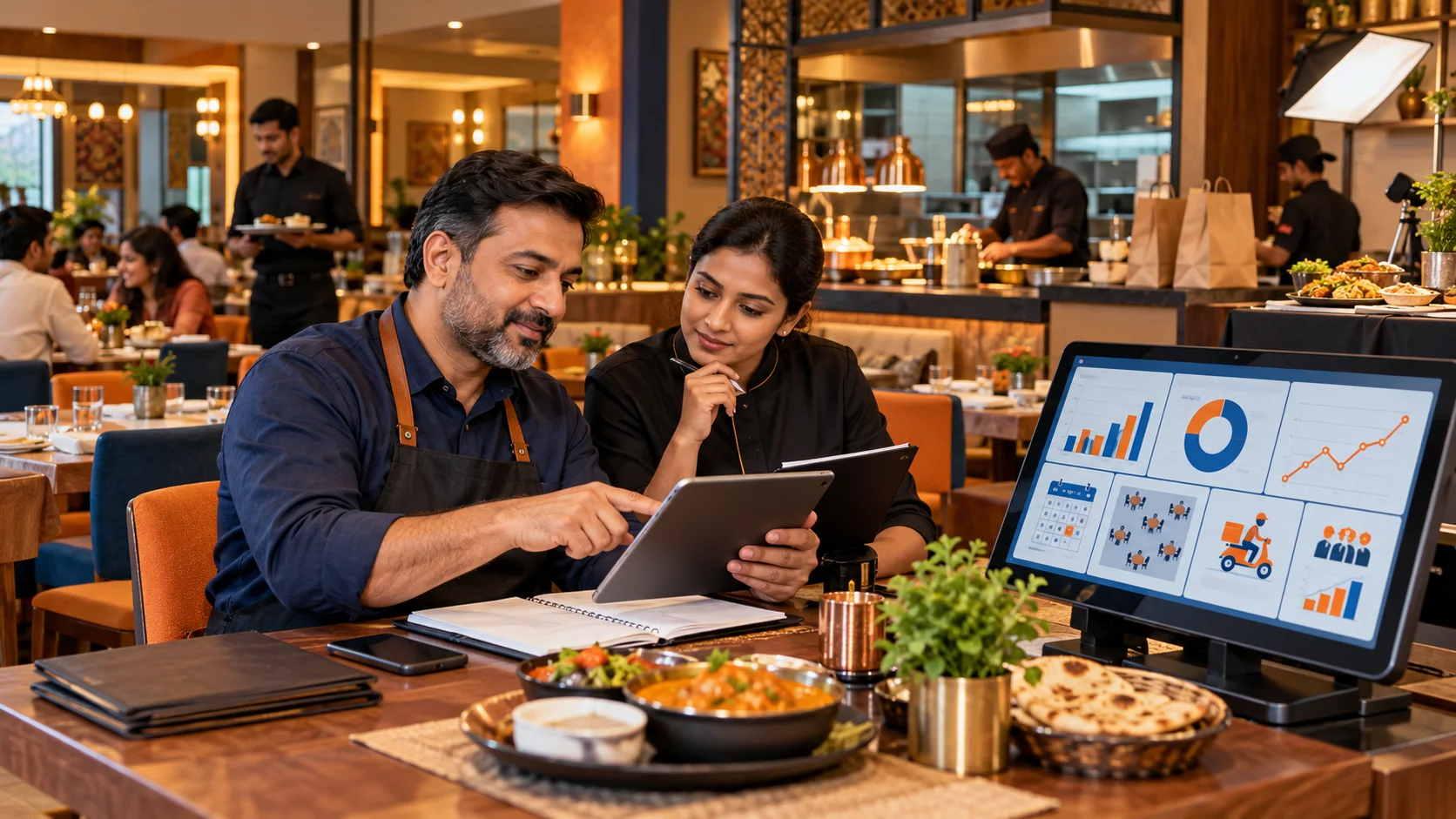
Restaurant Sales कैसे बढ़ाएं? India के लिए Complete Growth और Profit Guide 2026
Indian restaurants के लिए dine-in, takeaway और delivery sales बढ़ाने की detailed guide—menu engineering, pricing, table turnover, local discovery, loyalty, staff training और profit metrics।
Restaurant की sales केवल footfall बढ़ाने से नहीं बढ़ती। Revenue तब बनता है जब सही customers restaurant खोजें, visit या order करें, suitable items चुनें, अच्छा experience पाएं और दोबारा लौटें। लेकिन revenue बढ़ने के बाद भी food cost, discounts, wastage, labour और channel charges control न हों तो profit घट सकता है।
यह guide dine-in restaurant, cafe, bakery, QSR, takeaway counter और cloud-kitchen hybrid के लिए एक complete operating framework देती है। कोई fixed percentage growth guarantee नहीं है। Location, cuisine, capacity, pricing और customer segment अलग होते हैं; इसलिए हर strategy को controlled test और actual contribution data से validate करें।
Restaurant growth equation समझें
Revenue = Number of transactions × Average bill value
Transactions कई channels से आ सकती हैं: dine-in covers, takeaway bills, direct bookings, catering और marketplace orders। Average bill बढ़ाने के साथ repeat frequency और contribution भी देखना जरूरी है।
Contribution = Net sales − food cost − packaging − channel-linked variable charges − offer cost − other variable fulfilment cost
पहला diagnosis चार questions से शुरू करें:
- क्या पर्याप्त लोग restaurant खोज और visit कर रहे हैं?
- क्या visitors order में convert हो रहे हैं?
- क्या average bill और table capacity efficiently use हो रही है?
- क्या delivered sale के बाद वास्तविक contribution बच रहा है?
1. Low sales का root cause identify करें
| Symptom | Possible cause | First check |
|---|---|---|
| Low footfall | Weak visibility, access, positioning or demand | Maps views, direction requests, storefront and local competition |
| Footfall ठीक, bills कम | Menu friction, price mismatch or service delay | Walk-outs, menu time and order conversion |
| Orders अधिक, profit कम | Food cost, discounts, channel fees or waste | Item-level contribution and payout reconciliation |
| First visits अधिक, repeat कम | Inconsistent food, service or value | Feedback themes and 30/60-day repeat |
| Peak full, total sales flat | Slow table cycle or unused off-peak capacity | Daypart occupancy and table-turn time |
Marketing उस operational leak को fix नहीं करती जो kitchen, service या pricing में है। पहले bottleneck चुनें, फिर suitable experiment चलाएं।
2. Menu engineering करें
Menu engineering में हर dish की popularity और contribution compare होती है। चार practical groups बनाएं:
| Group | Popularity | Contribution | Action |
|---|---|---|---|
| Stars | High | High | Availability protect करें और visible placement दें |
| Workhorses | High | Low | Recipe, portion, price and add-on economics review करें |
| Puzzles | Low | High | Name, description, photo, placement and staff recommendation test करें |
| Low performers | Low | Low | Demand, prep complexity and inventory burden देखकर simplify or remove करें |
Item को केवल gross margin percentage से classify न करें। Preparation time, shared ingredients, wastage और kitchen bottleneck भी देखें। Low-selling item कभी strategic dietary option हो सकता है; decision पूरे customer mix पर लें।
3. Standard recipe और food cost control करें
हर core dish के लिए recipe card बनाएं: ingredient quantity, yield, portion, garnish, plating, cooking loss और current cost। Supplier price बदलने पर recipe cost update करें। अनुमान से pricing करने पर busy restaurant भी cash lose कर सकता है।
- Purchase unit और recipe unit consistent रखें।
- Edible yield और trimming loss record करें।
- Actual portion को standard scoop or weight से control करें।
- Daily high-value ingredient variance देखें।
- Complimentary items की cost भी bill economics में जोड़ें।
Food cost percentage useful है, लेकिन absolute contribution भी देखें। दो dishes का percentage समान होने पर rupee contribution अलग हो सकता है।
4. Price को market और value दोनों से align करें
Competitor price copy करना सही strategy नहीं है। आपके rent, recipe, portion, service format और positioning अलग हो सकते हैं। तीन layers compare करें:
- Cost floor: Variable cost और minimum contribution.
- Customer value: Portion, quality, ambience, convenience and trust.
- Market context: Similar local alternatives and channel-specific final price.
Dine-in, takeaway और delivery में packaging, commission, service और offer economics अलग हो सकते हैं। Applicable contract और law के भीतर channel-specific menu and price strategy बनाएं, लेकिन customer को misleading comparison न दिखाएं।
5. Average bill value service के साथ बढ़ाएं
Upselling का अर्थ हर customer को expensive item push करना नहीं है। Staff को meal-completion recommendations सिखाएं:
- Main dish के साथ suitable side or beverage
- Group size के अनुसार portion guidance
- Dietary preference के अनुसार alternative
- Meal के सही stage पर dessert
- Available और जल्दी तैयार होने वाले add-ons
“कुछ और?” की जगह specific, relevant choice दें। Staff incentive केवल bill value पर होगा तो pushy behaviour आ सकता है; customer feedback, order accuracy और repeat visits को भी score में रखें।
6. Table turnover को rush नहीं, flow की तरह सुधारें
Table turnover बढ़ाने का मतलब guest को जल्दी बाहर करना नहीं है। Waiting, ordering, cooking, payment और clearing delays कम करें।
Table turnover = Number of dining parties served ÷ Number of available tables
- Peak-hour reservation and walk-in rules clear रखें।
- Menu और water जल्दी दें, लेकिन decision के लिए pressure न डालें।
- POS-to-kitchen ticket delay measure करें।
- Bill request से payment completion time track करें।
- Accessible seating और special customer needs preserve करें।
Fast casual और celebration dining की ideal pace अलग होगी। Format-specific benchmark बनाएं।
7. Daypart और unused capacity monetise करें
Daily sales को breakfast, lunch, afternoon, dinner और late-evening में split करें। खाली hours के लिए generic discount की जगह relevant use case बनाएं:
- Nearby offices के लिए predictable lunch combo
- Afternoon cafe work bundle
- Early dinner for families or seniors
- Pre-booked group meal
- Weekend brunch or limited seasonal menu
Offer का incremental effect measure करें। अगर full-price customers केवल discounted hour में shift हो गए तो gross traffic बढ़कर भी profit नहीं बढ़ेगा।
8. Google Business Profile को digital storefront बनाएं
Verified restaurant profile में address, phone, hours, attributes, menu, photos, ordering and booking options current रखें। Google restaurant profiles menu sections, dishes, descriptions और prices दिखा सकते हैं। Changes display होने में time लग सकता है, इसलिए event के दिन पहली बार update न करें।
- Exterior photo से arrival पहचान आसान करें।
- Interior, seating और accessible entrance accurately दिखाएं।
- Signature dishes की current photos रखें।
- Old menu photo flag करें और updated menu publish करें।
- Holiday hours समय से update करें।
Profile performance में searches, views, calls, directions, website clicks, menu clicks और bookings जैसे applicable metrics मिल सकते हैं। AFShop की Google Business Profile guide local visibility का complete workflow देती है।
9. Reviews ethical तरीके से earn और manage करें
Google Maps policy genuine experience वाली unbiased reviews allow करती है, लेकिन payment, discount, free item या other incentive के बदले review prohibited है। केवल happy customers से positive review मांगना और unhappy customers को रोकना भी biased solicitation बन सकता है।
Neutral language use करें: “अपने genuine experience के बारे में feedback share करें।” Rating या wording dictate न करें। Response में:
- Specific feedback acknowledge करें।
- Personal customer data public न करें।
- Corrective action बताएं, legal liability invent न करें।
- Repeated themes weekly operations meeting में ले जाएं।
10. Social media को content system बनाएं
हर post को viral होना जरूरी नहीं। Content pillars बनाएं:
- Signature dish preparation
- Ingredient sourcing and team craft
- New menu or seasonal availability
- Ambience and real dining use cases
- Chef explanations and practical food education
Permission के बिना customer faces, private events या personal information publish न करें। Music, photos और creator collaborations के usage rights लिखित में रखें। Views से आगे reservations, direction requests, menu clicks और attributed sales देखें।
11. Loyalty programme को discount machine न बनाएं
Loyalty का goal repeat habit और customer recognition है। Reward structure simple रखें: eligible visit, points, expiry, excluded items और redemption rule स्पष्ट हों। Customer contact data consent, privacy notice और opt-out के साथ collect करें।
| Model | Useful when | Risk |
|---|---|---|
| Visit-based | Similar average tickets | Very small purchase gaming |
| Spend-based | Ticket size varies | Complex points explanation |
| Member benefit | Regular local audience | Benefit cost and unused liability |
| Occasion reminder | Birthdays or planned dining | Privacy and spam if consent weak |
12. Delivery और dine-in को अलग P&L की तरह पढ़ें
Delivery channel discovery और incremental demand दे सकता है, लेकिन packaging, discounts, refunds और platform-linked costs अलग होते हैं। Dine-in में occupancy, service labour और ambience cost अधिक relevant हैं। दोनों को gross revenue में मिलाने से economics छिप सकती है।
Zomato-specific menu, availability और fulfilment workflow के लिए AFShop की Zomato restaurant sales guide पढ़ें। वही tactics dine-in table पर mechanically apply न करें।
13. Corporate, catering और group occasions develop करें
Nearby offices, schools, clinics और communities recurring demand दे सकते हैं, लेकिन random bulk discount से पहले capacity और service design बनाएं:
- Minimum lead time and order value
- Standard packages and customisation limits
- Delivery or setup responsibility
- Deposit, cancellation and final-count terms
- Invoice and tax treatment
- Food holding and safety controls
One-time event को regular kitchen peak के साथ accept करने से both customer groups का experience बिगड़ सकता है। Separate production slot और owner तय करें।
14. Events को measurable demand programme बनाएं
Open mic, tasting menu, workshop या themed dinner तभी useful है जब audience-brand fit, permits, music rights, safety, capacity और economics clear हों। Event success केवल full seats नहीं:
- Incremental contribution
- New versus returning guests
- Off-peak capacity utilisation
- Event-to-repeat conversion
- Operational complaints
Temporary urgency truthful रखें; fake “last seats” trust कम करती है।
15. Staff training को daily operating system बनाएं
One-time induction पर्याप्त नहीं। Pre-shift 10-minute huddle में unavailable items, reservations, allergens, expected rush और service focus cover करें। Role-play करें: recommendation, complaint, dietary query और delay communication।
Staff को ऐसा claim न करने दें जो kitchen verify नहीं कर सकता—जैसे allergy-free, sugar-free या instant preparation। Escalation owner और response language तय करें।
16. Food safety और hygiene को revenue protection मानें
FSSAI licensing or registration, hygiene, storage, cleaning, pest control, staff practices और traceability applicable rules के अनुसार maintain करें। Hygiene incident immediate sales के साथ long-term trust और regulatory status प्रभावित कर सकता है।
- Opening and closing hygiene checklist
- Temperature and storage logs where required
- Approved suppliers and invoices
- FIFO/FEFO stock rotation
- Allergen and cross-contact controls
- Required trained food-safety supervision
17. Waste को daily rupee value में track करें
Waste categories अलग रखें: prep trim, spoilage, overproduction, plate return, wrong order और staff meal। Quantity के साथ cost record करें। एक ही total waste number root cause नहीं बताता।
Waste rate = Cost of recorded waste ÷ Food purchases or production cost × 100
Waste घटाने के लिए portion silently छोटा न करें। Forecast, batch size, menu complexity और supplier pack-size पहले देखें।
18. Restaurant growth dashboard बनाएं
| Area | Core metrics |
|---|---|
| Demand | Footfall, reservations, delivery orders, channel mix |
| Conversion | Walk-in seating, menu-to-order, booking completion |
| Ticket | Average bill, items per bill, add-on rate |
| Capacity | Occupancy by daypart, table turns, wait time |
| Operations | Prep time, order accuracy, cancellations, complaints |
| Customer | Repeat rate, genuine ratings, feedback themes |
| Economics | Food cost, labour, waste, contribution by channel |
Daily dashboard small रखें, weekly diagnosis deeper हो और monthly P&L reconciliation complete हो। Metrics की definition हर period में same रखें।
90-day action plan
Days 1–30: diagnose and stabilise
- Channel-wise sales and contribution baseline बनाएं।
- Top dishes की recipe cost और availability audit करें।
- Google profile, menu, hours and photos update करें।
- Top complaint और delay causes fix करें।
Days 31–60: improve conversion and ticket
- Menu engineering layout test करें।
- Staff recommendation training और order-accuracy checklist चलाएं।
- One off-peak product or combo test करें।
- Ethical review-request and response workflow standardise करें।
Days 61–90: build repeatable demand
- Consent-based loyalty pilot शुरू करें।
- One corporate or event format test करें।
- Content calendar को reservations and menu clicks से measure करें।
- Winning tests document करके SOP बनाएं।
Common mistakes
- Sales और profit को same समझना।
- Fake closure, growth or ROI statistics पर strategy बनाना।
- Permanent deep discount से demand खरीदना।
- Menu में low-demand complexity बनाए रखना।
- Paid or incentivised reviews लेना।
- Staff को aggressive upselling target देना।
- Customer data बिना consent marketing में use करना।
- Delivery and dine-in economics mix करना।
- Food safety को केवल inspection-day task मानना।
- एक साथ कई changes करके result का कारण खो देना।
Final takeaway
Restaurant sales का sustainable growth engine पांच चीजों से बनता है: profitable menu, reliable operations, discoverable local presence, trained service team और repeat customers। पहले bottleneck diagnose करें; फिर एक controlled change चलाएं और revenue के साथ contribution तथा customer experience measure करें।
अच्छा restaurant केवल customers attract नहीं करता—वह demand को accurately serve करता है, learning को SOP में बदलता है और हर channel की economics समझता है। यही process one-time promotion को repeatable business growth में बदलती है।
Sources and verification
- Google Business Profile for restaurants — restaurant profile, menu, photos, posts, reviews and performance features were checked from official Google guidance.
- Google Business Profile menu editor — menu sections, dish descriptions, prices, menu photos and update behaviour were verified from official documentation.
- Business Profile performance — searches, views, calls, directions, website clicks and booking metrics were checked from official Google documentation.
- Google Maps prohibited and restricted content — fake, paid, incentivised and selectively solicited review restrictions were verified from official policy.
- FSSAI Eat Right India guidance — restaurant hygiene and food-safety supervision context was checked from official material.
Restaurant regulations, taxes, platform terms and profile features can change. Owners should verify current official requirements and obtain qualified accounting, legal or food-safety advice for their business.
Found an error? Review our Corrections Policy or contact the editorial team.
Article at a glance
| Written by | Aditya Verma |
|---|---|
| Published | 01 Oct 2026, 12:13 AM IST |
| Reading time | 11 minutes |
| Topic | Ecommerce research and practical guidance |
Frequently Asked Questions
Restaurant sales बढ़ाने का पहला step क्या है?
पहले bottleneck identify करें: footfall, conversion, average bill, capacity, repeat visits या contribution। Diagnosis के बिना random discounts और ads useful learning नहीं देते।
Menu engineering क्या है?
Menu engineering dishes की popularity और contribution compare करके stars, popular low-contribution items, profitable low-popularity items और weak performers identify करती है।
Average bill value कैसे बढ़ाएं?
Relevant sides, beverages, portions और desserts suggest करें। Staff को customer need के अनुसार recommendation सिखाएं; aggressive or misleading upselling से बचें।
Google पर restaurant की visibility कैसे बढ़ाएं?
Verified Business Profile में accurate address, hours, phone, menu, current photos, attributes और booking or ordering links रखें। Searches, calls, directions और menu clicks track करें।
क्या review के बदले free item दे सकते हैं?
नहीं। Google Maps policy payment, discount, free item या other benefit के बदले review को incentivised engagement मानती है। Genuine experience वाला neutral feedback बिना incentive मांगें।
Restaurant offer profitable है या नहीं कैसे पता चलेगा?
Offer period की incremental delivered sales, discount cost, food and packaging cost, channel-linked charges, repeat rate और contribution को comparable period से compare करें।
Table turnover कैसे improve करें?
Guest को rush किए बिना seating, ordering, kitchen ticket, payment और clearing delays कम करें। Restaurant format के अनुसार service-time benchmark बनाएं।
Delivery और dine-in sales अलग क्यों track करें?
Delivery में packaging, marketplace-linked costs and refunds अलग होते हैं; dine-in में occupancy, service labour and ambience cost महत्वपूर्ण हैं। Combined revenue economics छिपा सकता है।
Restaurant के लिए सबसे जरूरी daily metrics कौन-से हैं?
Sales by channel and daypart, covers or orders, average bill, unavailable items, prep time, cancellations, waste and major complaints देखें। Weekly contribution and repeat behaviour analyse करें।
Restaurant growth plan कितने समय का होना चाहिए?
90-day cycle practical है: first 30 days diagnosis and stability, next 30 conversion improvement, और final 30 repeatable demand तथा documented SOP पर focus करें।

Aditya Verma
Local Business and Search WriterAditya creates practical local visibility guides for Indian shops, service providers and growing businesses, connecting search metrics with real customer actions.
View author profileRead More Blogs
Google Business Profile Ranking कैसे Improve करें? Local SEO की Complete 2026 Guide
Google Maps और local search में business visibility सुधारने के लिए profile verification, categories, reviews, photos, website, service areas और performance measurement की practical Hindi guide।
11 · Read blog
Local SEO Metrics for Small Businesses in India
The local visibility metrics that help Indian businesses understand search discovery, trust and customer action.
3 · Read blog
Zomato पर Restaurant Sales कैसे बढ़ाएं? 15 Free और Low-Cost Strategies 2026
Zomato पर restaurant या cloud kitchen की profitable sales बढ़ाने के लिए listing, menu, photos, availability, ratings, operations, pricing और analytics की 15 policy-safe strategies।
6 · Read blog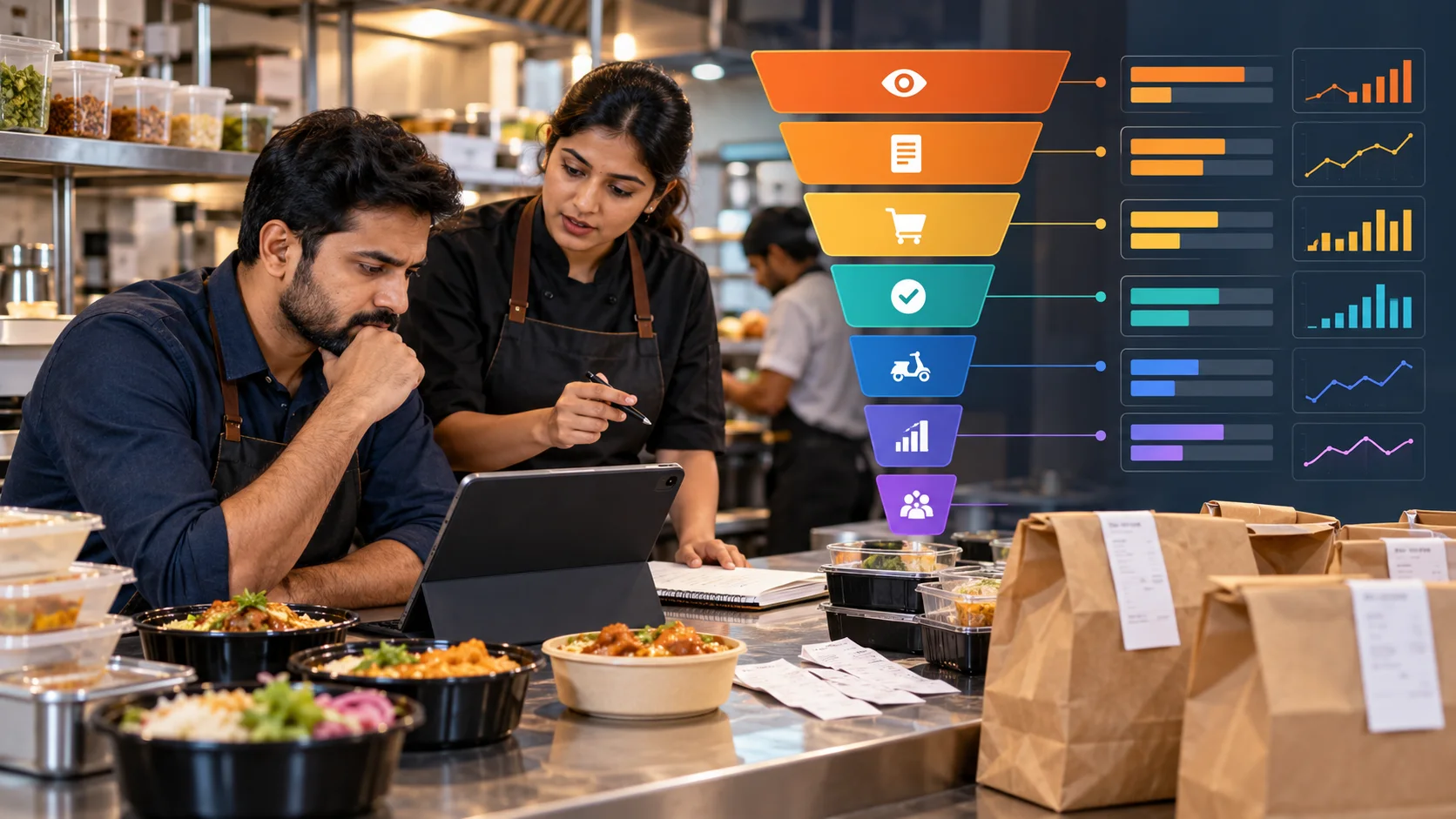
Zomato Orders क्यों नहीं बढ़ रहे? Impression से Repeat Order तक Complete Funnel Guide
Zomato orders बढ़ाने के लिए impression, menu open, cart, accepted order, delivery, contribution और repeat customer का complete data-driven funnel समझें।
16 · Read blog
Comments 0
No comments yet. Be the first to share a useful thought.
Leave a comment
Your email address will not be published. Comments are reviewed before appearing. Web addresses are displayed as plain text and are never clickable.