
Zomato Orders क्यों नहीं बढ़ रहे? Impression से Repeat Order तक Complete Funnel Guide
Zomato orders बढ़ाने के लिए impression, menu open, cart, accepted order, delivery, contribution और repeat customer का complete data-driven funnel समझें।
किसी restaurant को एक दिन 100 orders मिलना अच्छी खबर लग सकती है, लेकिन केवल order count से यह नहीं पता चलता कि growth sustainable है या नहीं। हो सकता है listing हजारों लोगों को दिख रही हो पर menu बहुत कम लोग खोल रहे हों। संभव है cart बन रहा हो, लेकिन checkout पर customer लौट रहा हो। Orders accept हो रहे हों, फिर भी late preparation, wrong item, refund और deep discount के कारण profit न बच रहा हो।
इस guide का लक्ष्य “10 secret hacks” देना नहीं है। यहां पूरा Zomato order conversion funnel समझाया गया है—eligible impression से repeat order तक। हर stage पर metric, diagnosis, practical action और profit guardrail दिया गया है। Exact reports, commercial terms, fees और dashboard options account, city तथा agreement के अनुसार बदल सकते हैं; current Restaurant Partner app और official policies final reference हैं।
Zomato order funnel क्या है?
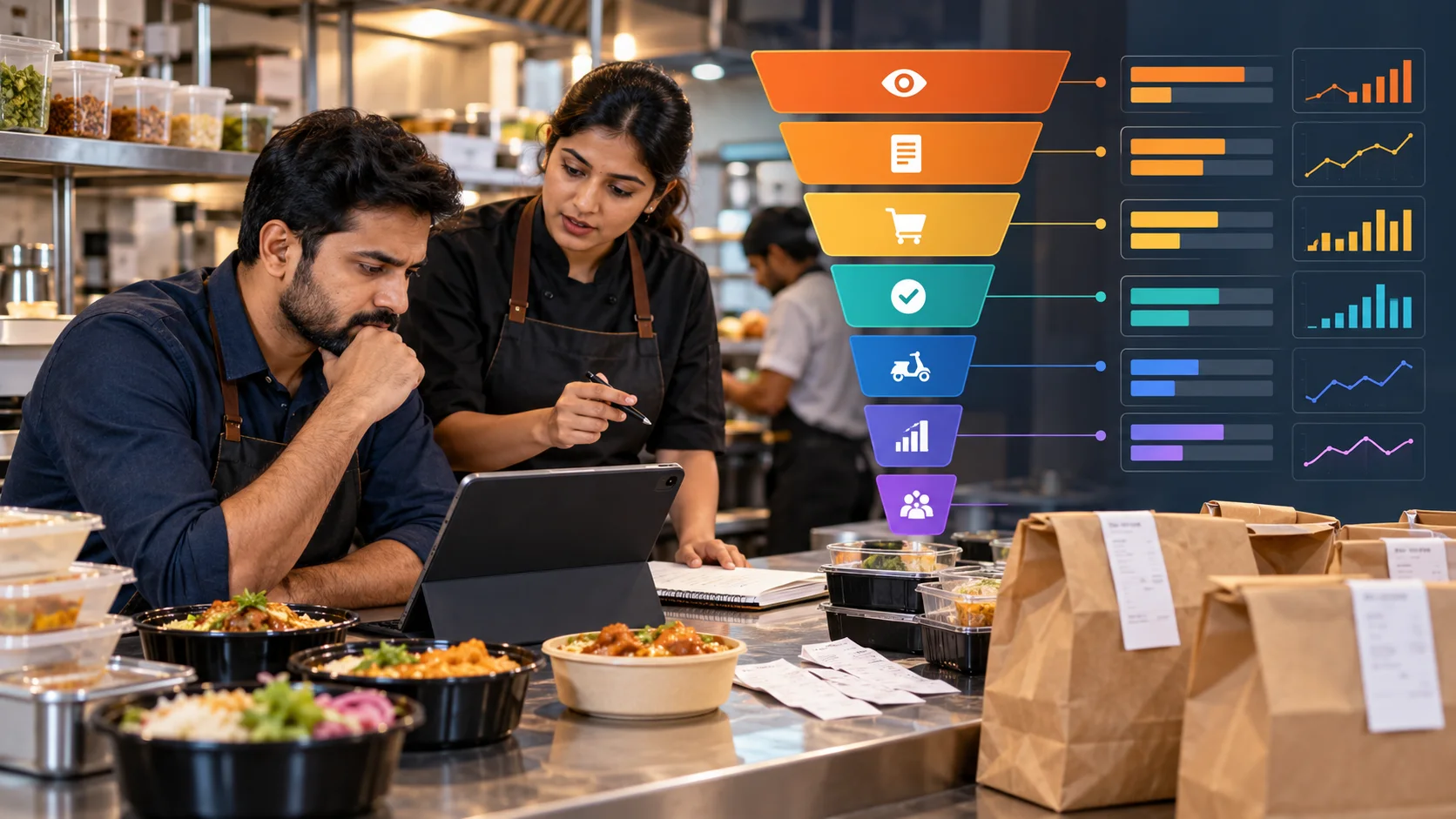
Customer journey को एक सीधी pipeline की तरह देखें। ऊपर बहुत लोग restaurant card देखते हैं, लेकिन हर अगले stage पर कुछ लोग बाहर निकलते हैं। सबसे बड़े leak को ठीक करना अक्सर नया discount चलाने से ज्यादा प्रभावी होता है।
- Eligible impressions: restaurant card कितनी relevant discovery situations में दिखा।
- Restaurant or menu opens: कितने लोगों ने listing खोलकर menu देखा।
- Item consideration: customer ने sections, items, photos, descriptions और prices explore किए।
- Cart creation: कम-से-कम एक item cart में गया।
- Order placement: customer ने checkout पूरा किया।
- Order acceptance: restaurant ने order स्वीकार किया।
- Preparation and handover: सही order समय पर packing के साथ तैयार हुआ।
- Delivered order: customer तक usable condition में order पहुंचा।
- Contribution: delivered order से वास्तविक variable costs के बाद कितना बचा।
- Repeat order: customer ने बाद में फिर restaurant चुना।
सबसे जरूरी funnel formulas
| Metric | Formula | यह क्या बताता है? |
|---|---|---|
| Menu open rate | Menu opens ÷ eligible impressions × 100 | Restaurant card click के लिए कितना convincing है |
| Cart rate | Carts ÷ menu opens × 100 | Menu customer को suitable item खोजने देता है या नहीं |
| Order conversion | Placed orders ÷ menu opens × 100 | Menu visit वास्तविक order में कितनी बार बदलती है |
| Acceptance rate | Accepted orders ÷ placed orders × 100 | Availability और capacity कितनी reliable है |
| Delivery success | Delivered orders ÷ accepted orders × 100 | Fulfilment chain कितनी stable है |
| Complaint or refund rate | Impacted delivered orders ÷ delivered orders × 100 | Delivered experience में quality leak |
| Repeat rate | Repeat customers ÷ eligible customer cohort × 100 | Trial customer loyalty में बदल रहा है या नहीं |
| Contribution per delivered order | Net order revenue − variable costs | हर completed order से वास्तविक operating value |
Report में उपलब्ध definitions को document करें। अलग-अलग date ranges या dashboard metrics को बिना definition मिलाए compare न करें। Broader measurement framework के लिए AFShop की ecommerce metrics guide भी देखें।
Leak map: symptom देखकर सही action चुनें
| Symptom | संभावित कारण | पहला test |
|---|---|---|
| Impressions कम | Hours, serviceability, availability, cuisine relevance या demand mismatch | Daypart और location coverage audit |
| Impressions ठीक, menu opens कम | Weak cover photo, price perception, rating context, ETA या unclear positioning | Hero visual और restaurant proposition test |
| Menu opens ठीक, carts कम | Confusing sections, weak item photos, unclear portion, unavailable bestsellers | Top menu path simplify करें |
| Carts ठीक, orders कम | Final value, charges, ETA, minimum basket या weak combo | Checkout-stage basket pattern review |
| Placed orders अधिक, acceptance कम | Stock, staffing, inaccurate hours या excessive capacity | Rejection reason by daypart |
| Accepted orders, complaints अधिक | Prep delay, packing, wrong item, portion या temperature | Complaint taxonomy and dispatch audit |
| First orders अधिक, repeat कम | Inconsistent experience, discount-only demand या shallow menu | 30-day cohort by first item and offer |
1. Listing card को accurate decision card बनाएं
Customer card पर कुछ seconds में cuisine fit, food appeal, price level, delivery estimate और trust का अनुमान लगाता है। इसलिए image सुंदर होने के साथ accurate होनी चाहिए। Actual portion या menu से unrelated stock photo click तो ला सकती है, लेकिन expectation mismatch बढ़ाती है।
- Restaurant name, cuisine, address, contact और opening hours current रखें।
- Cover में वही food family दिखाएं जो consistently available हो।
- Primary cuisine और menu के top sections आपस में match हों।
- Temporary capacity problem हो तो order accepting status सही रखें।
- Performance को daypart से देखें—breakfast problem को dinner average में न छिपाएं।
Official online-ordering terms restaurant partner से menu, prices, hours और business information current रखने की अपेक्षा करती हैं। इसलिए “visibility trick” से पहले accuracy fix करें।
2. Menu को search list नहीं, guided decision path बनाएं
बहुत बड़ा menu customer को choice overload दे सकता है। पहला screen ऐसा हो कि new customer जल्दी समझ सके कि restaurant किस चीज के लिए अच्छा है। एक practical order यह हो सकता है:
- Bestsellers
- Complete meals or combos
- Core cuisine categories
- Sides and add-ons
- Beverages and desserts
- Family or group packs
“Special”, “Regular” या “Chef Choice” अकेले पर्याप्त title नहीं हैं। Item name में food identity स्पष्ट रखें; description में main ingredients, portion guidance, spice level, included items और relevant allergen note दें। हर description keyword list न बने।
3. Menu-open से cart तक conversion सुधारें
Menu खुलने के बाद customer के तीन सवाल होते हैं: मुझे क्या मिलेगा, कितनी quantity होगी और total value उचित है या नहीं। इसलिए top 10 viewed items पर सबसे पहले काम करें।
- Photo वास्तविक delivered portion के करीब हो।
- Variant और size का अंतर साफ हो।
- Optional add-on को included item जैसा न दिखाएं।
- Unavailable bestseller तुरंत pause करें।
- Duplicate items और nearly identical sections कम करें।
- Solo, two-person और family use cases के लिए clear choices रखें।
Photo update के बाद केवल total orders न देखें। Updated items का view-to-cart pattern और complaint rate compare करें।
4. Cart से order placement तक friction पहचानें
Customer cart बनाकर भी price, charges, delivery estimate या basket value के कारण exit कर सकता है। Restaurant हर checkout element control नहीं करता, इसलिए controllable factors अलग करें।
- Single-person basket के लिए practical entry point रखें।
- Combo में genuine convenience और visible value हो।
- Popular meal को unnecessary paid add-ons पर dependent न बनाएं।
- Packaging charge और item price को commercial records के अनुसार review करें।
- Peak hour में unrealistic speed promise बनाने की कोशिश न करें।
Cart abandonment का exact कारण हमेशा दिखाई नहीं देगा। इसलिए item mix, basket size, delivery period और offer cohort के pattern से evidence बनाएं—assumption को fact न लिखें।
5. Discount से पहले contribution guardrail तय करें
Delivered contribution = net order revenue − ingredient cost − packaging − restaurant-funded promotion − applicable variable charges − expected wastage/refund cost
यह accounting profit का replacement नहीं है, लेकिन campaign test के लिए useful operating metric है। Exact deductions payout statement और agreement से लें। तीन guardrails रखें:
- Minimum contribution per delivered order
- Maximum acceptable complaint or refund rate
- Target repeat window, जैसे 30 days
अगर offer orders बढ़ाता है लेकिन delivered contribution negative और repeat weak है, तो वह growth नहीं—subsidised volume है।
6. Zomato ads को acquisition experiment की तरह चलाएं
Paid visibility impressions खरीद सकती है; वह weak menu, stock problem या poor packaging ठीक नहीं करती। Campaign शुरू करने से पहले baseline रखें और campaign period को comparable dayparts से compare करें।
| Measure | गलत interpretation | बेहतर question |
|---|---|---|
| Impressions | अधिक impressions = success | Incremental qualified menu opens बढ़े? |
| Orders | हर attributed order नया है | Organic baseline के ऊपर कितने delivered orders जुड़े? |
| Revenue | Revenue = profit | Ad और promotion के बाद contribution कितना बचा? |
| New customers | First order = loyal customer | Comparable cohort ने repeat किया? |
एक time पर budget, audience context, offer और menu को सभी न बदलें। Otherwise causal learning खत्म हो जाएगी।
7. Acceptance rate stock और capacity का report card है
Order placement marketing की जीत हो सकती है; rejection operations की failure है। Rejection reasons को broad label में न छोड़ें। इन्हें item unavailable, kitchen overload, closed kitchen, equipment issue, staffing और accidental miss में classify करें।
- Opening से पहले bestseller stock checklist करें।
- Meal-period capacity तय करें।
- Sold-out item तुरंत unavailable करें।
- Equipment failure पर प्रभावित section pause करें।
- Service न दे सकें तो accepting-orders control बंद करें।
Official terms poor customer experience और frequent restaurant-attributable rejection पर action की संभावना बताती हैं। Capacity से ज्यादा order लेना healthy growth नहीं है।
8. Preparation और handover को अलग-अलग measure करें
“Delivery late थी” एक combined symptom है। Delay kitchen preparation, packing queue, partner wait या handover identification में हो सकती है। कम-से-कम ये timestamps रखें: accepted, cooking started, packed, ready, handed over.
- Fast, medium और slow-prep items classify करें।
- Peak-hour menu complexity कम करने का test करें।
- Order ID और item count packing slip पर स्पष्ट रखें।
- Hot और cold items जरूरत के अनुसार separate करें।
- Ready food को pickup point तक पहुंचने में लगने वाला समय track करें।
Average के साथ 90th percentile भी देखें। दस fast orders एक बहुत late order से हुई complaint को neutral नहीं करते।
9. Packaging और accuracy refund leakage कम करते हैं
Food taste सही होने के बावजूद missing add-on, spilled gravy या wrong variant customer trust तोड़ सकता है। Dispatch checklist छोटी लेकिन mandatory रखें:
- Order ID और package count
- Main items और variants
- Sides, beverages और paid add-ons
- Leak check और seal
- Applicable label or mandatory information
Complaint taxonomy में “quality issue” एक ही bucket न रखें। Leakage, missing item, wrong item, temperature, portion, taste और foreign-object concern अलग करें। तभी corrective action measurable होगा।
10. Reviews को demand signal और operations data दोनों समझें
Ratings discovery और trust को प्रभावित कर सकती हैं, लेकिन fake या incentivised reviews sustainable रास्ता नहीं हैं। Official guidelines deceptive, paid या benefit-linked reviews को allow नहीं करतीं। Staff, friends या exchange group से non-experience reviews न लें।
Genuine review response में concern acknowledge करें, available facts तक सीमित रहें, sensitive customer details public न मांगें और corrective action बताएं। Weekly review themes को operational dashboard में जोड़ें। Detailed rating practices के लिए AFShop की Zomato restaurant growth guide पढ़ें।
11. Daypart, category और geography से averages खोलें
Overall conversion misleading हो सकता है। Lunch strong और dinner weak हो, लेकिन combined average normal दिखेगा। Dashboard को कम-से-कम इन segments में देखें:
- Breakfast, lunch, evening और dinner
- Weekday versus weekend
- New versus repeat customers, जहां report उपलब्ध हो
- Core category or item family
- Offer versus non-offer orders
- Practical delivery zone or distance band, जहां permitted aggregate data मिले
Customer personal data export, reuse या unauthorized marketing न करें। Only permitted aggregate reports और consented channels use करें।
12. Repeat order cohort असली product-market fit दिखाता है
Repeat को calendar total से नहीं, first-order cohort से देखें। उदाहरण: September में पहली बार order करने वाले eligible customers में कितने 30 days के भीतर फिर आए? अलग cohorts बनाएं:
- First item or cuisine ordered
- Offer versus no-offer acquisition
- Delivered without complaint versus complaint-affected
- Lunch versus dinner first experience
अगर discount cohort repeat नहीं करता लेकिन full-value bestseller cohort करता है, तो acquisition strategy बदलनी चाहिए। Repeat के लिए unauthorized contact नहीं, consistent marketplace experience और useful menu depth पर focus करें।
13. One-variable test कैसे करें?
- एक clear hypothesis लिखें: “Top section में complete meals रखने से cart rate बढ़ेगा।”
- Primary metric और guardrail metric चुनें।
- Comparable weekdays और meal periods लें।
- एक समय पर एक meaningful variable बदलें।
- Low-volume data पर जल्दी conclusion न निकालें।
- Order mix, contribution और complaints साथ check करें।
- Result, date और decision log करें।
High-volume restaurant में सात दिन useful signal दे सकते हैं; low-volume listing को 14–28 days चाहिए हो सकते हैं। Fixed universal test duration नहीं है।
Weekly funnel dashboard template
| Stage | Primary KPI | Guardrail | Owner |
|---|---|---|---|
| Discovery | Eligible impressions and menu-open rate | Accurate availability | Listing manager |
| Menu | Cart rate and top-item conversion | Complaint rate by item | Menu owner |
| Checkout | Placed orders per menu open | Contribution per order | Commercial owner |
| Acceptance | Acceptance rate | Stock-out and capacity rejection | Shift manager |
| Kitchen | Ready and handover time | Food safety and accuracy | Kitchen lead |
| Experience | Delivery success and feedback | Refund or complaint rate | Operations lead |
| Loyalty | 30-day repeat cohort | Discount dependency | Business owner |
30-day Zomato funnel improvement sprint
Days 1–7: measurement and leak discovery
- Last 4–8 weeks का funnel baseline बनाएं।
- Daypart, item और offer segments निकालें।
- Top three leaks और complaint causes लिखें।
- Contribution formula को payout records से align करें।
Days 8–14: highest-impact menu fix
- Top section simplify करें।
- High-view items की photos और descriptions improve करें।
- Unavailable and duplicate items clean करें।
- एक controlled menu experiment शुरू करें।
Days 15–21: fulfilment control
- Stock and capacity checklist implement करें।
- Preparation timestamps capture करें।
- Dispatch accuracy check enforce करें।
- Top packaging failure का corrective test करें।
Days 22–30: profitable acquisition and repeat
- Foundation stable हो तो limited ad or offer test करें।
- Incremental delivered contribution compare करें।
- First-order cohort का early repeat signal देखें।
- Winning change document करें और next leak चुनें।
Common funnel mistakes
- Total orders को अकेला success metric मानना।
- Ads से weak menu या poor operations ठीक करने की कोशिश करना।
- Gross revenue को contribution समझना।
- एक साथ photo, price, offer और timing बदलना।
- Rejected और cancelled orders का root cause न रखना।
- Average preparation time से extreme delays छिपाना।
- Paid या incentivised reviews लेना।
- Repeat को acquisition offer से अलग न देखना।
- Customer data का unauthorized reuse करना।
- Small sample से permanent decision लेना।
Final takeaway
Zomato orders बढ़ाने की शुरुआत नए discount से नहीं, सबसे बड़े funnel leak से होती है। Menu-open rate weak है तो listing और value proposition देखें। Cart rate weak है तो menu path, photos और availability सुधारें। Acceptance weak है तो stock और capacity ठीक करें। Delivered orders के बाद contribution और repeat weak हैं तो pricing, packaging, consistency तथा customer experience पर काम करें।
हर week एक funnel stage चुनें, एक controlled test चलाएं और primary metric के साथ guardrail भी देखें। Broad restaurant operations के लिए restaurant sales and profit guide useful companion है। Sustainable growth वही है जिसमें customer को reliable meal मिले, restaurant को positive contribution बचे और वही customer दोबारा लौटे।
Sources and verification
- Zomato Online Ordering Terms — restaurant information, menu and price accuracy, accepting-delivery controls, order fulfilment and restaurant responsibilities were checked against official terms.
- Zomato Guidelines and Policies — review integrity and the prohibition on fake, deceptive or incentivised reviews were verified from official policy guidance.
- Zomato Terms of Service — platform use, restaurant-partner content responsibilities and customer-content handling were reviewed from official terms.
Dashboard definitions, commercial charges, advertising options and programme availability may change. Restaurant operators should verify their current agreement, Restaurant Partner app and applicable professional advice before making business decisions.
Found an error? Review our Corrections Policy or contact the editorial team.
Article at a glance
| Written by | Pooja Sharma |
|---|---|
| Published | 01 Oct 2026, 12:20 AM IST |
| Reading time | 12 minutes |
| Topic | Ecommerce research and practical guidance |
Frequently Asked Questions
Zomato order funnel क्या होता है?
यह customer journey है जो eligible impression से menu open, cart, placed order, acceptance, delivery, contribution और repeat order तक जाती है। हर stage का conversion अलग measure होता है।
Zomato पर impressions हैं लेकिन orders नहीं आ रहे तो क्या देखें?
पहले menu-open rate देखें। वह कम हो तो cover, cuisine relevance, value perception, rating context, availability और delivery estimate audit करें। Menu opens ठीक हों तो cart और checkout conversion देखें।
Menu conversion कैसे बढ़ाएं?
Bestsellers ऊपर रखें, categories simplify करें, accurate photos और useful descriptions दें, portion और included items स्पष्ट करें तथा unavailable items तुरंत pause करें।
क्या Zomato ads से orders guaranteed बढ़ते हैं?
नहीं। Paid visibility impressions बढ़ा सकती है, लेकिन weak menu, stock problem या poor fulfilment ठीक नहीं करती। Campaign को incremental delivered contribution और repeat behaviour से evaluate करें।
Contribution per delivered order कैसे निकालें?
Net order revenue से ingredient, packaging, restaurant-funded promotion, applicable variable charges और expected refund or wastage cost घटाएं। Exact components अपने payout statement और agreement से लें।
Acceptance rate कम होने का मुख्य कारण क्या है?
Stock-out, inaccurate hours, kitchen overload, equipment problem, staff shortage या missed alerts कारण हो सकते हैं। Rejection reasons को daypart और item के अनुसार classify करें।
Zomato reviews legally और safely कैसे बढ़ाएं?
Order accuracy, taste, portion, temperature, packaging और complaint handling सुधारकर genuine reviews earn करें। Fake, paid या benefit-linked reviews official guidelines के खिलाफ हैं।
Funnel test कितने दिन चलाना चाहिए?
यह order volume पर निर्भर है। Comparable weekdays और meal periods में one-variable test चलाएं। High volume में सात दिन signal दे सकते हैं, जबकि low volume को 14–28 days लग सकते हैं।
Repeat order rate कैसे analyze करें?
First-order cohort बनाकर देखें कि eligible customers में कितने 30 days जैसे fixed window में फिर आए। Offer, first item, daypart और complaint experience के अनुसार cohorts compare करें।
Zomato orders बढ़ाने का पहला practical step क्या है?
Last 4–8 weeks का funnel baseline बनाएं और सबसे बड़ा leak चुनें। एक controlled change करें, primary KPI के साथ contribution या complaint जैसे guardrail metric भी track करें।

Pooja Sharma
Ecommerce Analytics WriterPooja explains ecommerce analytics in plain English, helping buyers and sellers understand discovery, conversion, fulfilment, returns and customer loyalty metrics.
View author profileRead More Blogs
Meesho Dropshipping 2026: बिना Heavy Inventory Selling कैसे शुरू करें?
Meesho पर low-inventory selling का practical Hindi guide: seller registration, supplier selection, stock sync, catalog, packing, returns, unit economics और compliant scaling।
23 · Read blog
India के 30 Best Online Selling Platforms: Sellers के लिए Complete 2026 Guide
India में products online बेचने के लिए 30 marketplaces, niche channels, B2B networks, social commerce और own-store platforms की practical Hindi comparison।
14 · Read blog
Customers कैसे पाएं? First 100 Customers की Acquisition Guide 2026
Small business के लिए customers पाने की practical Hindi guide: ICP, offer, outreach, referrals, partnerships, content, sales pipeline, CAC और 90-day roadmap।
9 · Read blog
Zomato पर Restaurant Sales कैसे बढ़ाएं? 15 Free और Low-Cost Strategies 2026
Zomato पर restaurant या cloud kitchen की profitable sales बढ़ाने के लिए listing, menu, photos, availability, ratings, operations, pricing और analytics की 15 policy-safe strategies।
6 · Read blog
Comments 0
No comments yet. Be the first to share a useful thought.
Leave a comment
Your email address will not be published. Comments are reviewed before appearing. Web addresses are displayed as plain text and are never clickable.