

Online Products कैसे बेचें? Idea से First 50 Orders तक Complete Guide 2026
Online products बेचने के लिए product selection, customer research, store setup, payments, shipping, listings, marketing और first 50 orders की practical Hindi guide।
Online selling शुरू करना केवल product की photo upload करके advertisement चलाने का काम नहीं है। एक sustainable store के लिए सही product, clear target customer, profitable pricing, trusted checkout, reliable delivery और responsive customer support—सभी एक साथ काम करते हैं। इनमें से किसी एक layer में weakness होने पर traffic आने के बाद भी sales नहीं बनती या returns profit खत्म कर देते हैं।
यह guide भारत में अपना online store या selling channel शुरू करने वाले beginners के लिए है। इसका focus idea से first 50 genuine orders तक का practical workflow है। Goal overnight success नहीं, बल्कि ऐसा repeatable system बनाना है जिसमें हर order से data मिले और अगला decision guesswork के बजाय evidence पर लिया जाए।
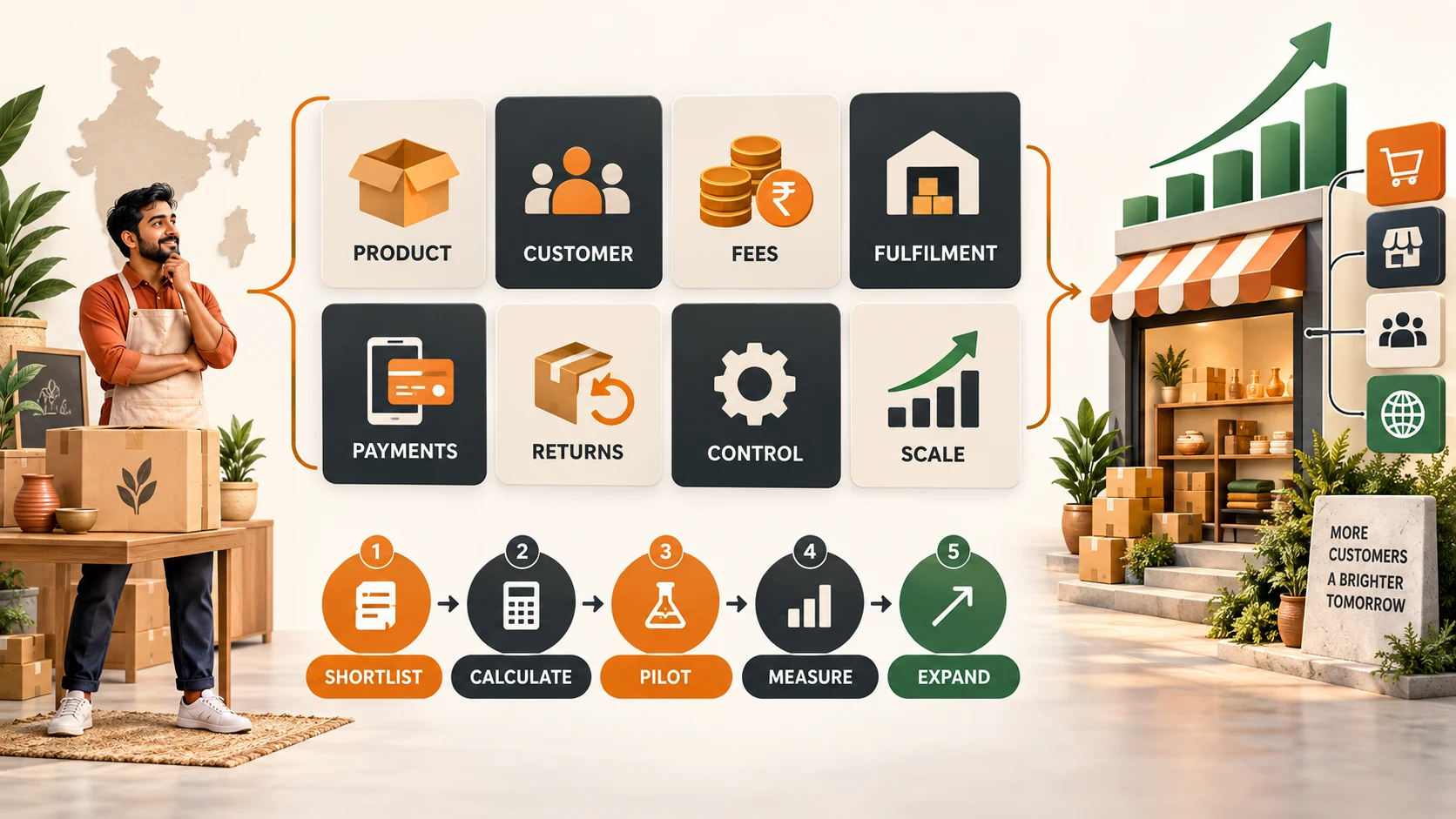
Step 1: Product नहीं, customer problem चुनें
“क्या बेचें?” का बेहतर version है: “किस customer की कौन-सी problem बेहतर तरीके से solve कर सकते हैं?” Generic product crowded market में price competition में फंस सकता है। Specific audience, use case या benefit positioning को clear बनाता है।
उदाहरण के लिए “water bottle” broad product है। “Office commute के लिए leak-resistant insulated bottle” clear use case है। इसका मतलब narrow market में बंद होना नहीं है; इसका मतलब launch message को understandable बनाना है।
Product idea validation checklist
- क्या customers similar product अभी खरीद रहे हैं?
- Existing reviews में repeated complaints क्या हैं?
- Product की landed cost और expected selling price में margin है?
- क्या product safely pack और ship किया जा सकता है?
- Return, damage या size mismatch risk कितना है?
- क्या supplier consistent quality और repeat stock दे सकता है?
- क्या product demonstration photo या video में आसान है?
पहले small batch या pre-order test करें। Large inventory खरीदने से पहले 10–20 potential customers से feedback लें और sample quality स्वयं check करें।
Step 2: Ideal customer profile बनाएं
Target customer केवल age और city नहीं है। आपको उसका buying trigger, objection, preferred channel और decision criteria समझना चाहिए। एक simple one-page profile बनाएं:
| Area | क्या लिखें? | Example question |
|---|---|---|
| Need | Customer किस outcome की तलाश में है? | वह अभी कौन-सी problem solve करना चाहता है? |
| Trigger | Purchase की urgency क्यों बनी? | Event, replacement, gift या convenience? |
| Objection | खरीदने से क्या रोकता है? | Price, trust, size, quality या delivery? |
| Proof | किस evidence पर भरोसा होगा? | Reviews, demo, specification या guarantee? |
| Channel | वह products कहां discover करता है? | Search, social media, marketplace या referrals? |
Survey में leading questions न पूछें। “क्या आप यह product खरीदेंगे?” की जगह “पिछली बार आपने ऐसा product कब खरीदा, कितना खर्च किया और क्या problem आई?” पूछें। Past behaviour अक्सर hypothetical promise से ज्यादा useful होता है।
Step 3: Competitor research को copying न बनाएं
Competitor analysis का उद्देश्य उनकी listing copy करना नहीं, market expectation और gaps समझना है। कम से कम पांच direct और पांच indirect alternatives compare करें। Product price के साथ delivery charge, return terms, review themes, image quality और customer questions भी note करें।
One-star से three-star reviews valuable होती हैं क्योंकि इनमें unmet expectations दिखाई देती हैं। यदि complaints slow delivery की हैं तो आपकी opportunity faster dispatch हो सकती है। यदि size confusion है तो accurate size guide competitive advantage बन सकती है।
Step 4: Profitable price तय करें
Selling price केवल supplier cost पर markup लगाकर तय न करें। हर delivered order की पूरी variable cost calculate करें:
- Product purchase या manufacturing cost
- Inbound freight और quality inspection
- Packaging material और labour
- Payment gateway या marketplace charges
- Forward shipping और COD-related cost
- Return-to-origin तथा customer returns allowance
- Discount और affiliate commission
- Advertisement/customer acquisition cost
Contribution per delivered order = Net selling price − सभी variable costs. यदि contribution बहुत कम है, तो higher sales नुकसान बढ़ा सकती है। Base, expected और worst-case return scenario अलग बनाएं।
Step 5: सही selling model चुनें
| Model | Advantage | Main challenge |
|---|---|---|
| Own website | Brand, customer journey और data पर अधिक control | Traffic और trust स्वयं build करना पड़ता है |
| Marketplace | Existing shopper demand और discovery | Fees, competition और platform dependency |
| Social commerce | Content से direct conversations और discovery | Order management और scale process चाहिए |
| Hybrid | Multiple demand sources | Inventory, pricing और support sync complex हो सकता है |
Beginners एक channel से operations सीखकर दूसरा जोड़ सकते हैं। सभी platforms पर एक साथ launch करने से stock mismatch और slow support का risk बढ़ता है। Platform comparison के लिए AFShop की Online Selling Platforms Guide देखें।
Step 6: Store foundation तैयार करें
Store design attractive होने के साथ predictable होना चाहिए। Customer को category, search, product details, cart और checkout आसानी से मिलें। Minimum useful pages:
- Homepage with clear value proposition
- Category और search pages
- Detailed product pages
- About और contact information
- Shipping, return, privacy और terms pages
- Frequently asked questions
- Order tracking या support instructions
Theme चुनते समय visual effects से पहले mobile speed, accessibility और checkout compatibility check करें। Shopify evaluate कर रहे हों तो Shopify Business Fit Decision Guide उपयोगी है।
Step 7: Payment और checkout test करें
Preferred payment method न मिलने या payment failure पर buyer checkout छोड़ सकता है। Relevant options में cards, UPI, wallets, net banking और business fit होने पर COD शामिल हो सकते हैं। हर method की fee, settlement time, refund process और dispute handling समझें।
Checkout test cases
- Successful prepaid order
- Failed payment और retry
- COD confirmation
- Discount code और minimum order rule
- Cancelled order
- Full और partial refund
- Out-of-stock during checkout
- Mobile address entry और autofill
Security badges दिखाने से पहले वे वास्तविक हों। Fake trust elements short-term click दे सकते हैं, लेकिन brand reputation और compliance को नुकसान पहुंचाते हैं।
Step 8: Shipping और fulfilment design करें
Customer को dispatch time, estimated delivery और tracking स्पष्ट दिखना चाहिए। Free shipping हमेशा free नहीं होती; उसका cost product price या business margin में absorb होता है। Minimum order threshold तभी रखें जब average order value और contribution उसे support करें।
Packaging test में drop, moisture, tampering और product-specific risk देखें। Fragile, liquid, food, battery या high-value item के लिए specialised requirements हो सकती हैं। पहले 20 orders के बाद damage rate, delivery time और return reasons review करें।
Step 9: Product listing को virtual salesperson बनाएं
Product page को customer के मुख्य questions का जवाब देना चाहिए। केवल supplier description paste करने से uniqueness और trust दोनों कमजोर होते हैं।
High-converting listing structure
- Clear product title with primary attribute
- Multiple accurate images और scale reference
- Top benefits in short bullets
- Material, dimensions, compatibility और box contents
- How to use और care instructions
- Price, stock और delivery information
- Return or warranty conditions
- Real reviews और common FAQs
Images consistent background में लें, लेकिन product colour और texture misleading तरीके से edit न करें। Video demo complex product के hesitation को कम कर सकता है।
Step 10: Pre-launch audience बनाएं
Launch day से पहले waitlist, product education और behind-the-scenes content से interested audience बनाएं। Friends और family से artificial reviews लेने की जगह real testers को product देकर honest feedback collect करें। Micro creators चुनते समय follower count से ज्यादा audience relevance और engagement quality देखें।
14-day pre-launch outline
- Days 1–3: Customer problem और product story
- Days 4–6: Feature demonstrations और FAQ
- Days 7–9: Tester feedback और use cases
- Days 10–12: Price, delivery और launch offer clarity
- Days 13–14: Reminder, inventory status और launch timing
Step 11: First traffic strategy
एक साथ हर marketing channel शुरू न करें। एक discovery channel और एक retention channel चुनें। उदाहरण: search content + email, या social video + WhatsApp opt-in। Paid ads में small controlled budget से creative, audience और landing page test करें।
| Channel | Use case | पहला metric |
|---|---|---|
| SEO/content | Problem-aware search demand | Qualified impressions और engaged visits |
| Social content | Visual discovery और demonstrations | Saves, profile visits और product clicks |
| Paid search | High-intent queries | Cost per qualified checkout |
| Paid social | Demand creation और retargeting | Landing-page conversion और CAC |
| Retention और cart recovery | Revenue per recipient, not only opens | |
| Referrals | Trust-led acquisition | Delivered orders और repeat rate |
Step 12: Customer support और feedback loop
Response speed महत्वपूर्ण है, लेकिन correct resolution अधिक महत्वपूर्ण है। Email, chat या messaging channel में expected response time बताएं। Repeated questions को listing और FAQ में जोड़ें। Repeated complaints को support script से छिपाने की जगह product या process सुधारें।
Delivery के बाद feedback लें, लेकिन positive review के बदले misleading incentive न दें। Review request में product experience, delivery, packaging और improvement suggestion अलग पूछ सकते हैं।
First 50 orders का roadmap
Orders 1–10: System verification
हर order manually observe करें। Payment, notification, packing, tracking और delivery में error log बनाएं। इस stage में speed से ज्यादा correctness जरूरी है।
Orders 11–25: Conversion सुधार
Product questions, cart abandonment और support issues analyze करें। Images, description, shipping clarity और checkout friction सुधारें। केवल discount बढ़ाकर problem hide न करें।
Orders 26–50: Repeatable process
Packing checklist, customer responses, return handling और daily inventory routine document करें। Winning traffic source पर controlled budget बढ़ाएं। Repeat purchase या referral offer तभी दें जब delivery experience stable हो।
Daily dashboard में क्या track करें?
- Sessions और product views
- Add-to-cart और checkout-start rate
- Payment success rate
- Customer acquisition cost
- Delivered-order contribution
- Cancellation, return और RTO rate
- Average order value
- Support response और resolution time
- Repeat purchase rate
Revenue अकेला health metric नहीं है। High revenue के साथ low margin, excessive returns या delayed settlements cash flow संकट बना सकते हैं।
Common mistakes
- Demand validate किए बिना large inventory खरीदना
- Competitor price copy करना लेकिन अपनी cost न समझना
- Supplier description और photos 그대로 इस्तेमाल करना
- Return और shipping conditions छिपाना
- Tracking setup से पहले ads चलाना
- सभी channels पर एक साथ launch करना
- COD orders confirm न करना
- Complaints को product feedback न मानना
- Revenue को profit समझ लेना
30-day launch plan
- Week 1: Product validation, customer interviews, competitor review और unit economics।
- Week 2: Samples, catalogue content, photography, policies और platform setup।
- Week 3: Payments, shipping, analytics, test orders और pre-launch content।
- Week 4: Controlled launch, support monitoring, daily metrics और rapid fixes।
Broader business planning और first customers strategy के लिए Online Business Complete Guide तथा First 100 Customers Acquisition Guide पढ़ सकते हैं।
Online selling का सही क्रम है: validate करें, margin समझें, छोटा launch करें, पूरे order journey को measure करें और तभी scale करें। First 50 orders का उद्देश्य केवल sales count बढ़ाना नहीं, बल्कि ऐसा operating system बनाना है जिसे quality और customer trust खोए बिना repeat किया जा सके।
Sources and verification
Found an error? Review our Corrections Policy or contact the editorial team.
Article at a glance
| Written by | Pooja Sharma |
|---|---|
| Published | 02 Oct 2026, 09:48 AM IST |
| Reading time | 10 minutes |
| Topic | Ecommerce research and practical guidance |
Frequently Asked Questions
Online products बेचने की शुरुआत कहां से करें?
Customer problem और product demand validate करें। Small batch test, competitor reviews और complete unit economics समझने के बाद platform तथा inventory पर खर्च करें।
Online store या marketplace में से क्या चुनें?
Marketplace existing demand देता है लेकिन fees और platform dependency होती है। Own store brand और customer journey पर control देता है, पर traffic स्वयं लाना पड़ता है। कई sellers staged hybrid model अपनाते हैं।
Product का सही selling price कैसे निकालें?
Product cost के साथ packaging, payment charges, shipping, returns allowance, discounts, commissions और customer acquisition cost जोड़ें। Net selling price से सभी variable costs घटाकर contribution देखें।
पहले कितनी inventory खरीदनी चाहिए?
यह demand confidence, supplier lead time और product risk पर निर्भर है। Beginners के लिए sample और small test batch से वास्तविक conversion तथा return data लेना safer होता है।
Online selling के लिए कौन-से pages जरूरी हैं?
Homepage, category, product, about, contact, shipping, returns, privacy, terms, FAQ और order-support information minimum useful foundation बनाते हैं।
First 50 orders में क्या measure करें?
Payment success, conversion, acquisition cost, delivery time, contribution, cancellation, returns, RTO, support issues और repeat purchase signals track करें।
क्या शुरुआत में paid ads चलानी चाहिए?
Tracking, product page, payment और fulfilment test होने के बाद small controlled budget से ads test करें। पहले creative, audience और landing page data collect करें, फिर scale करें।
Online selling में सबसे common mistake क्या है?
Demand और unit economics validate किए बिना inventory तथा ads पर अधिक खर्च करना common mistake है। Revenue को profit मानना और returns cost ignore करना भी risky है।

Pooja Sharma
Ecommerce Analytics WriterPooja explains ecommerce analytics in plain English, helping buyers and sellers understand discovery, conversion, fulfilment, returns and customer loyalty metrics.
View author profileRead More Blogs
Meesho Dropshipping 2026: बिना Heavy Inventory Selling कैसे शुरू करें?
Meesho पर low-inventory selling का practical Hindi guide: seller registration, supplier selection, stock sync, catalog, packing, returns, unit economics और compliant scaling।
23 · Read blog
Zomato Orders क्यों नहीं बढ़ रहे? Impression से Repeat Order तक Complete Funnel Guide
Zomato orders बढ़ाने के लिए impression, menu open, cart, accepted order, delivery, contribution और repeat customer का complete data-driven funnel समझें।
16 · Read blog
India के 30 Best Online Selling Platforms: Sellers के लिए Complete 2026 Guide
India में products online बेचने के लिए 30 marketplaces, niche channels, B2B networks, social commerce और own-store platforms की practical Hindi comparison।
14 · Read blogCustomers कैसे पाएं? First 100 Customers की Acquisition Guide 2026
Small business के लिए customers पाने की practical Hindi guide: ICP, offer, outreach, referrals, partnerships, content, sales pipeline, CAC और 90-day roadmap।
9 · Read blog
Comments 0
No comments yet. Be the first to share a useful thought.
Leave a comment
Your email address will not be published. Comments are reviewed before appearing. Web addresses are displayed as plain text and are never clickable.