
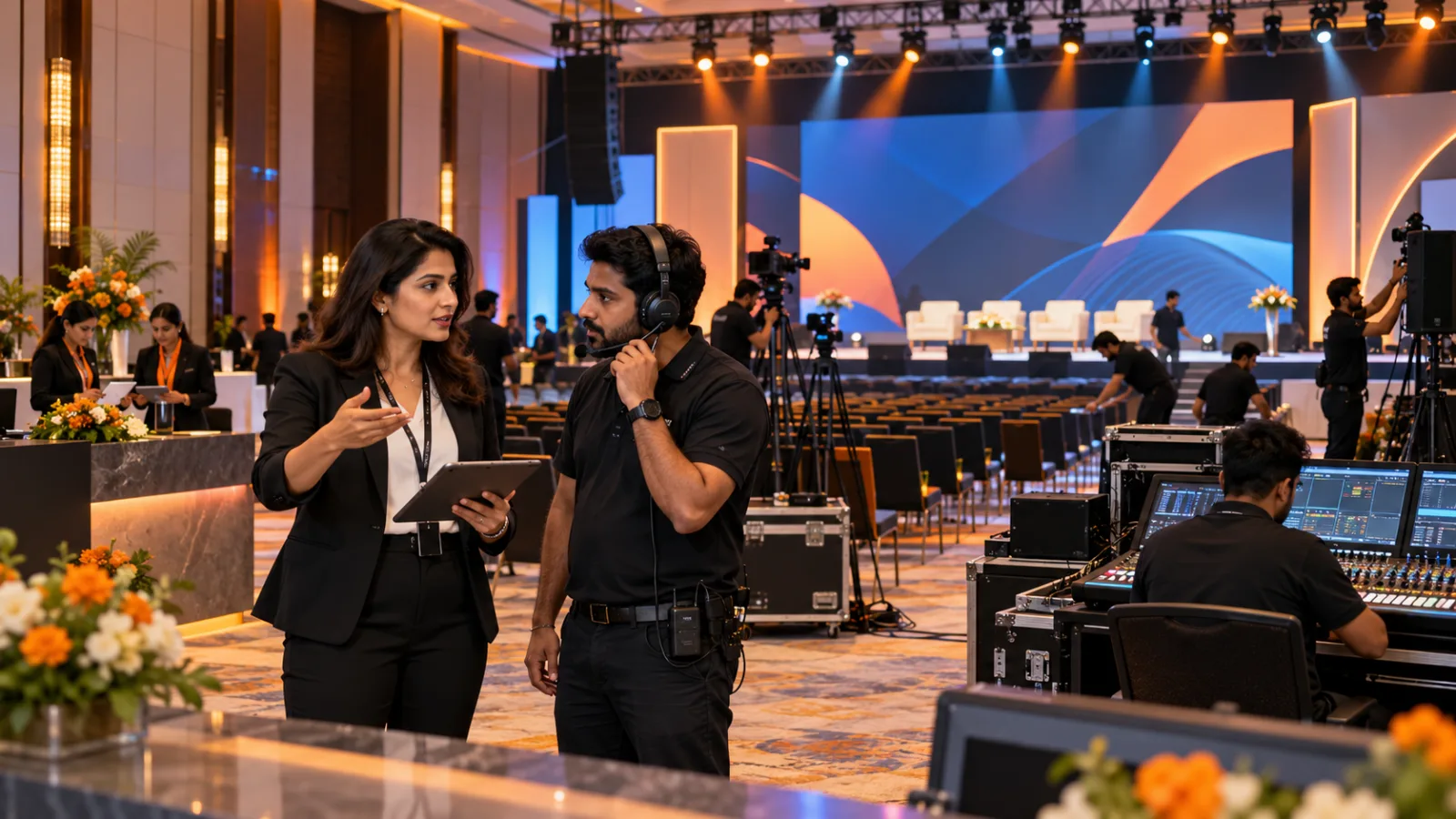
Corporate Event Planning Checklist 2026: India में Complete Step-by-Step Guide
India में corporate event plan करने की detailed checklist: objective, budget, venue recce, vendors, AV, permissions, guest journey, event-day control और ROI reporting।
Corporate event की सफलता केवल attractive stage या good food से तय नहीं होती। एक product launch, annual meet, dealer conference, award night, seminar या leadership offsite तब professional लगता है जब objective, approvals, guest journey, technology, safety और post-event follow-up एक ही operating plan में जुड़े हों।
यह guide company के marketing, HR, administration, procurement और event teams के लिए एक practical master checklist है। इसे छोटे indoor seminar से लेकर multi-day conference तक event size के अनुसार adapt किया जा सकता है। हर checklist item हर event पर लागू नहीं होगा; जो लागू हो उसका owner, deadline और proof स्पष्ट रखें।
Corporate event planning: one-page master checklist
| Workstream | Critical decision | Required proof |
|---|---|---|
| Objective | Event से कौन-सा measurable outcome चाहिए? | Approved event brief and KPIs |
| Governance | कौन decide, approve और execute करेगा? | RACI and escalation matrix |
| Budget | Approved ceiling और contingency क्या है? | Cost sheet with committed/actual values |
| Venue | Capacity, access, safety और technical fit सही है? | Signed contract and site-recce report |
| Production | Stage, sound, lights, screens और power कैसे चलेंगे? | Technical design, cue sheet and backups |
| Guests | Invite से exit तक experience क्या होगा? | Registration flow and communication plan |
| Compliance | कौन-सी permission/licence applicable है? | Written approval or applicability confirmation |
| Safety | Emergency, medical, crowd और weather plan क्या है? | Safety plan and incident process |
| Event day | Minute-by-minute control किसके पास होगा? | Run-of-show and command structure |
| Measurement | Success कैसे calculate होगा? | Attendance, engagement, leads and finance report |
Step 1: Event objective को measurable बनाएं
“Brand awareness” या “employees को engage करना” अकेले पर्याप्त objective नहीं हैं। Business outcome और audience behaviour दोनों define करें। उदाहरण:
- Product launch: Target accounts की attendance, qualified demo requests और launch content reach
- Dealer meet: Active dealer participation, new scheme adoption और follow-up orders
- Employee town hall: Attendance, submitted questions, understanding score और feedback
- Conference: Registrations, show-up rate, session engagement, sponsor delivery और leads
- Award event: Nomination participation, guest experience और approved media assets
Event brief में purpose, target audience, expected attendance, city, preferred dates, format, languages, accessibility needs, budget range, decision makers और top three KPIs लिखें। Objective approve होने से पहले venue या celebrity lock करना planning को उल्टा चला सकता है।
Step 2: Governance और approval matrix बनाएं
Corporate events में delay अक्सर vendor की वजह से नहीं, unclear approvals की वजह से होता है। Simple RACI model रखें:
| Role | Typical responsibility | Authority |
|---|---|---|
| Event sponsor | Business objective and final direction | Major scope/budget approval |
| Event lead | Integrated plan, deadlines and decisions | Day-to-day execution |
| Finance/procurement | PO, vendor checks, tax and payment | Commercial approval |
| Brand/content | Creative, messaging, speakers and media | Brand approval |
| Venue/production lead | Site, stage, AV, power and rehearsals | Technical sign-off |
| Safety/security lead | Access, crowd, emergency and incident response | Stop-work authority for unsafe activity |
हर deliverable का approver और response deadline लिखें। WhatsApp discussion को final approval न मानें; approved version, date और owner shared tracker में रखें।
Step 3: Budget sheet में hidden costs पकड़ें
Budget को केवल venue, food और decor में divide न करें। एक useful cost structure यह है:
- Venue rent, deposits, rooms, overtime and utilities
- Stage, set, fabrication, branding, furniture and signage
- Sound, lighting, LED screens, cameras, streaming and internet
- Speakers, artists, host, travel, accommodation and hospitality
- Registration technology, printing, badges and guest support
- Catering, water, crew meals and dietary arrangements
- Security, medical, housekeeping, transport and logistics
- Permissions, insurance, taxes, payment charges and contingency
- Agency fee, event staff, rehearsals, content and post-production
Sheet में estimated, quoted, approved, committed, paid और actual अलग columns रखें। Contingency कोई universal percentage नहीं है; open-air venue, temporary structures, VIP movement, complex AV या short timeline में risk अलग होगा। Contingency use करने का approval rule पहले तय करें।
Step 4: Venue shortlist और physical site recce
Website photos देखकर venue final न करें। Event lead, production partner और venue operations contact के साथ physical recce करें।
| Area | Recce questions |
|---|---|
| Capacity and layout | Chosen seating style, aisles, stage, stalls और backstage के बाद usable capacity कितनी है? |
| Access | Guest entry, wheelchair access, VIP route, crew entry और loading bay अलग हैं? |
| Safety | Emergency exits visible हैं? Fire equipment, assembly point और maximum capacity documented है? |
| Technical | Ceiling height, rigging rules, power load, earthing, generator policy और cable routes क्या हैं? |
| Internet | Dedicated bandwidth, device capacity, backup line और on-site support का SLA क्या है? |
| Operations | Setup/strike window, noise deadline, storage, green rooms, washrooms और housekeeping scope क्या है? |
| Logistics | Parking, buses, nearby hotels, material movement, freight lift और delivery time restrictions क्या हैं? |
| Weather | Outdoor plan के लिए rain, heat, wind, drainage और indoor backup क्या है? |
Recce पर photos, measurements, socket/load details, access routes और restrictions record करें। Venue contract में inclusions, taxes, cancellation, damage, overtime, external-vendor fee और refund conditions पढ़ें।
Step 5: Vendor scope of work लिखें
तीन quotations तभी comparable हैं जब scope समान हो। हर vendor को written SOW दें जिसमें quantity, dimensions, material, finish, manpower, reporting time, transport, installation, testing, dismantling, overtime, tax और backup responsibility शामिल हो।
Lowest quote चुनना जरूरी नहीं। Relevant experience, crew strength, inventory ownership, safety practice, response time, references और recovery plan score करें। Sound, power, internet, registration और transport जैसे critical workstream में backup option रखें।
Step 6: Stage, AV और technology checklist
- Stage dimensions, load, steps, railings, lectern, seating और accessible route
- Audience size के अनुसार speaker coverage और sound check
- Wired/wireless microphones, spare batteries और backup microphone
- LED/projector resolution, aspect ratio, brightness और content test
- Presentation laptop, backup laptop, adapters, clicker और offline copies
- Lighting scenes for entry, speech, panel, awards and photography
- Camera positions, recording format, live-stream delay और consent
- Dedicated internet, backup connection और critical system isolation
- Power distribution, safe cable ramps, earthing और backup supply
- Full technical rehearsal plus speaker microphone rehearsal
एक ही laptop, internet line या microphone पर निर्भरता avoid करें। Cue sheet में हर video, light scene, walk-in music, slide और microphone handover का exact trigger और owner लिखें।
Step 7: Agenda, speakers और content
Agenda को केवल session titles की list न रखें। Session objective, speaker, duration, format, audience action, technical need और transition time जोड़ें। Long speeches के बीच breaks, networking और room reset का practical time रखें।
- Speaker invitation and written confirmation
- Topic, audience profile, timing and restricted claims brief
- Slide template, submission deadline and review owner
- Travel, pickup, hotel, green room and stage escort
- Name/title pronunciation, intro script and lower-third spelling
- Backup plan if speaker is delayed or joins remotely
- Photo, recording and content-reuse consent
Step 8: Registration और guest journey
Guest experience invitation से शुरू होता है, entry gate से नहीं। Audience segments के अनुसार RSVP form रखें और केवल आवश्यक data collect करें। Privacy notice, communication consent और data access सीमित रखें।
| Journey stage | Checklist |
|---|---|
| Invitation | Clear purpose, date, venue, map, RSVP deadline and contact |
| Confirmation | Unique registration, calendar link, travel/access guidance |
| Reminder | Weather, parking, ID requirement, reporting time and support |
| Arrival | Signage, queue lanes, search desk, walk-in policy and accessibility |
| Inside venue | Help desk, agenda, washroom, food, emergency and feedback cues |
| Exit | Transport, materials, feedback, next step and lost-and-found |
Peak arrival का load test करें। Alphabetical desks तभी useful हैं जब guest distribution balanced हो; QR/self-check-in तभी उपयोगी है जब backup manual search available हो।
Step 9: Catering और food safety
Caterer से applicable FSSAI licence/registration, menu, serving capacity, hygiene process और service team confirm करें। Official FSSAI catering guidance permanent और temporary food-service settings में hygiene और food-safety management की expectations समझने में मदद करती है।
- Guest count, service style, service window and replenishment plan
- Vegetarian/non-vegetarian separation and clear labels
- Allergen and dietary requests का safe handling
- Potable water, hand hygiene, hot/cold holding and protected storage
- Crew meals, speaker/VIP meals and delayed-session backup
- Waste segregation, leftover handling and clean-up ownership
Menu tasting appearance के साथ service speed और actual event quantity का substitute नहीं है। Large event में kitchen/service capacity और replenishment route verify करें।
Step 10: Permissions, licences और contracts
Requirements city, venue, audience, activity और current law पर निर्भर करते हैं। Applicability list बनाकर owner और deadline तय करें:
- Venue, public gathering, local authority or police approvals where applicable
- Fire safety, temporary structure, electrical load and occupancy compliance
- Music/public-performance permissions and content usage rights
- Food-service compliance and caterer documentation
- Alcohol/excise permission where applicable
- Drone operation, airspace and authorised operator requirements
- Noise, timing, traffic, road use, signage or outdoor advertising rules
- Insurance, liability, data/privacy and photography consent
Drone शूटिंग हो तो current DGCA rules, permitted airspace और operator requirements official sources से verify करें। Vendor की verbal assurance के बजाय written responsibility और documents रखें।
Step 11: Safety, security और accessibility
- Venue emergency plan, exits, assembly point and evacuation roles
- First-aid, ambulance/hospital contact and medical escalation
- Expected crowd, queue barriers, bag/ID policy and prohibited items
- VIP and speaker movement without blocking emergency routes
- Temporary electrical, rigging, elevated work and cable safety
- Accessible entry, seating, washroom, signage and assistance
- Incident log, evidence, communication owner and stop-work authority
- Child/senior guests, heat, rain and late-night transport risks
Safety plan को document बनाकर drawer में न रखें। Crew briefing में exits, medical point, escalation code और decision authority explain करें।
Planning timeline: event size के अनुसार adapt करें
| Checkpoint | Priority actions |
|---|---|
| 30+ days before | Brief, budget, venue, agency/vendors, permissions tracker, guest strategy |
| 14 days before | Agenda, speakers, creative, technical plan, catering, logistics, registration test |
| 7 days before | Final counts, scripts, production drawings, approvals, security and backup review |
| 3 days before | Weather/travel check, print lock, data export, contact sheet and packing |
| 1 day/setup day | Build, safety inspection, content upload, complete rehearsal and venue sign-off |
| Event day | Command centre, checkpoints, live issue log, approvals and closing handover |
| Within 1–7 days | Finance closure, feedback, leads, media, vendor score and KPI report |
Large or high-risk event को इससे काफी पहले शुरू करना पड़ सकता है; small meeting में timeline short हो सकती है। Critical dependencies देखकर reverse plan बनाएं।
Event-day command structure
एक event director या show caller final operational control में हो। Venue को zones में divide करें—registration, auditorium, backstage, catering, transport, VIP और technical control—और हर zone का named owner रखें।
- Single master run-of-show with version number
- Contact sheet and dedicated communication channel
- Scheduled checkpoints: setup, doors open, show start, breaks, closing
- Change log: request, decision, cost, approver and time
- Issue severity levels and escalation path
- Cash/expense control and authorised emergency purchases
- End-of-day inventory, damage and venue handover sign-off
Contingency scenarios पहले लिखें
| Risk | Prepared response |
|---|---|
| Speaker delayed | Agenda swap, holding content, remote connection and audience message |
| Power/AV failure | Backup supply, spare equipment, offline content and technical escalation |
| Internet failure | Secondary link, offline registration list and local presentation copies |
| Rain/heat | Indoor fallback, covered movement, water, revised transport and guest alert |
| Low turnout | Room reconfiguration, reminder plan and content/lead recovery |
| High turnout | Overflow, queue control, extra seats/food and capacity stop rule |
| Medical/security issue | Immediate response owner, privacy, crowd control and documented escalation |
Post-event closure और ROI report
Event खत्म होने पर काम खत्म नहीं होता। अगले working day में attendance data, pending leads, invoices, damages, content और feedback का owner तय करें।
- Registrations, attendance, show-up rate and audience mix
- Session attendance, questions, scans, downloads or app engagement
- Qualified leads, meetings, orders or internal actions
- Guest satisfaction, common comments and complaints
- Sponsor/partner deliverables and evidence
- Budget variance, unapproved spend and final cost per attendee/lead
- Vendor scorecard, failures, overtime and reusable learnings
- Approved photos/videos, consent limits and content plan
ROI हमेशा direct sales नहीं होता। Internal event में adoption, retention, learning या alignment metric relevant हो सकता है। Objective के साथ तय metric ही report करें; vanity photos को business result न मानें।
In-house planning या event agency?
| Choose more in-house control when | Consider specialist agency support when |
|---|---|
| Small repeat format और capable internal team हो | Complex production, multiple vendors or short timeline हो |
| Brand/content confidentiality बहुत high हो | Venue sourcing, artist, travel or large guest logistics हो |
| Existing vendor contracts और operating templates हों | Hybrid broadcast, large stage, permits or multi-city delivery हो |
Agency hire करने पर भी objective, approvals और internal stakeholders की ownership company की रहती है। Agency scope, fee, vendor mark-up, procurement route और change-order process contract में साफ रखें।
Final printable checklist
- ☐ Approved brief, audience, format and KPIs
- ☐ Budget owner, cost tracker and contingency rule
- ☐ Venue contract, recce report and layout
- ☐ Vendor SOWs, backups and payment schedule
- ☐ Agenda, scripts, speakers and content approvals
- ☐ AV design, power, internet and rehearsal
- ☐ Registration, guest communication and accessibility
- ☐ Catering documents, menu and service plan
- ☐ Permissions, insurance and written responsibilities
- ☐ Safety, medical, security and weather response
- ☐ Run-of-show, cue sheet, contacts and escalation
- ☐ Post-event finance, leads, content and KPI report
यदि आप event service business शुरू करना चाहते हैं तो Event Management Business Guide पढ़ें। Promotion के लिए Startup Marketing Guide, local visibility के लिए Google Business Profile Guide और client pipeline के लिए First 100 Customers Guide उपयोगी हैं।
Sources and verification
This is an independent educational checklist. Permissions, food safety, aviation, fire, tax, insurance and local requirements vary by event, venue, city and current rules; verify applicability with the relevant authority and qualified professionals.
Found an error? Review our Corrections Policy or contact the editorial team.
Article at a glance
| Written by | Priya Deshmukh |
|---|---|
| Published | 03 Oct 2026, 07:10 PM IST |
| Reading time | 11 minutes |
| Topic | Ecommerce research and practical guidance |
Frequently Asked Questions
Corporate event planning कब शुरू करनी चाहिए?
एक fixed universal timeline नहीं है। Guest count, venue availability, production complexity, speakers, travel और permissions देखकर reverse plan बनाएं। Large or high-risk events को अधिक lead time चाहिए।
Corporate event budget में क्या-क्या शामिल करना चाहिए?
Venue, production, AV, branding, speakers, travel, registration, catering, staffing, security, medical, logistics, permissions, taxes, agency fee और risk-based contingency को अलग track करें।
Venue final करने से पहले क्या check करें?
Usable capacity, layout, exits, accessibility, loading access, power, rigging, internet, setup hours, parking, washrooms, storage, weather backup और contract restrictions का physical site recce करें।
Corporate event के लिए कौन-सी permissions चाहिए?
Requirement event type, venue, city और activities पर निर्भर करती है। Fire, crowd, music, food, alcohol, drone, noise, traffic और outdoor-signage applicability written tracker में verify करें।
Event agency को कैसे select करें?
Comparable work, project team, vendor transparency, production capability, safety process, commercial clarity, references और failure-recovery plan score करें; केवल lowest fee पर decision न लें।
Event में AV failure से कैसे बचें?
Full rehearsal, spare microphones, backup laptop/content, protected power distribution, tested cables, secondary internet और named technical escalation रखें।
Guest registration की queue कैसे कम करें?
Pre-confirmed data, multiple search methods, peak-arrival capacity, clear signage, trained desks, walk-in policy और manual backup list रखें।
Caterer से कौन-से documents और checks लें?
Applicable FSSAI licence or registration, hygiene process, service capacity, menu and dietary handling confirm करें। Potable water, temperature control, protected storage और waste process भी review करें।
Drone से event shoot कर सकते हैं?
Current DGCA rules, airspace, permissions और authorised operator requirements पहले verify करें। Venue approval या vendor assurance alone पर्याप्त नहीं हो सकती।
Event-day run-of-show क्या है?
यह minute-by-minute control document है जिसमें timing, stage cue, speaker, AV action, transition, owner और backup action लिखा होता है। एक controlled version सभी leads के पास होना चाहिए।
Corporate event का ROI कैसे measure करें?
Objective के अनुसार attendance, engagement, qualified leads, meetings, orders, employee understanding, sponsor delivery, satisfaction और budget variance measure करें। हर event में direct sales ही सही metric नहीं है।
Event के बाद कौन-सा काम जरूरी है?
Finance reconciliation, lead handover, feedback, vendor scoring, incident review, approved media delivery, consent limits और KPI report complete करें।

Priya Deshmukh
Editorial Research WriterPriya turns research, public data and practical checks into clear articles for AFShop readers.
View author profileRead More Blogs

Print-on-Demand Business कैसे शुरू करें? India में बिना Bulk Stock Selling की Guide
India में print-on-demand business शुरू करने की Hindi-English guide: niche, original designs, supplier samples, store setup, working capital, pricing, COD, returns और first orders।
23 · Read blog
कम Budget में Café कैसे खोलें? India के लिए Cost, Licence और Profit Plan 2026
India में कम budget café खोलने की detailed Hindi guide: concept, location test, setup budget, FSSAI, menu costing, equipment, break-even, marketing और 30-day launch plan।
11 · Read blog
How to Find Wholesale Suppliers in India for Your Online Business
Find and compare manufacturers, wholesalers and distributors using samples, written specifications, landed costs and small trial orders.
10 · Read blog
How to Sell on WhatsApp Business: Catalog, Orders and Customer Follow-up
Set up a useful WhatsApp Business catalog, collect clear order details, verify payments and organise customer support without losing track of chats.
4 · Read blog
Comments 0
No comments yet. Be the first to share a useful thought.
Leave a comment
Your email address will not be published. Comments are reviewed before appearing. Web addresses are displayed as plain text and are never clickable.