

क्या नया Brand Blinkit पर Sell कर सकता है? First-Time Brands के लिए 60-Day Launch Playbook
First-time D2C और consumer brands के लिए Blinkit readiness test, hero-SKU selection, packaging, compliance, unit economics, city-cluster launch और 60-day growth plan।
हां, first-time brand Blinkit Seller Hub पर apply कर सकता है। Official Seller Hub businesses of every size को registration के लिए invite करता है और brand information में registered trademark के साथ trademark application details भी accept करने की बात करता है। लेकिन नया होना और launch-ready होना दो अलग बातें हैं। Platform पर application submit करना आसान हो सकता है; सही product, compliant pack, viable price और reliable replenishment के साथ टिकना कठिन हिस्सा है।
यह guide general registration steps को repeat नहीं करती। इसका focus founder decision पर है: क्या आपका brand quick commerce के लिए अभी ready है, कौन-से 2–5 products से शुरुआत करनी चाहिए, कितनी inventory risk करनी है, packaging mobile thumbnail और physical inwarding दोनों में कैसे काम करेगी, और first 60 days में किस metric पर scale या stop का फैसला लेना चाहिए।
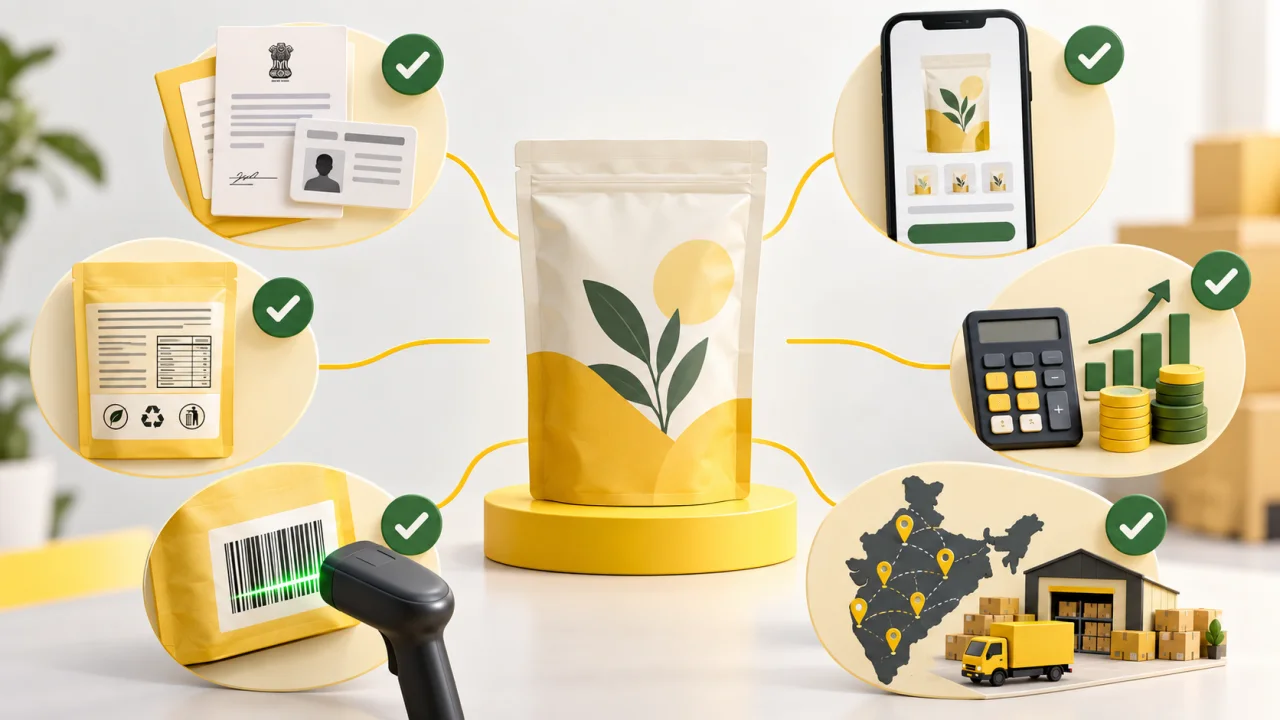
First-time brand के लिए short answer
Prior marketplace sales helpful evidence हो सकती हैं, लेकिन official Seller Hub public information कोई minimum revenue history publish नहीं करती। Official FAQ businesses of every size का स्वागत करता है। फिर भी approval और commercial success category suitability, documents, product compliance, inventory capability और current platform review पर depend करते हैं।
इसलिए “क्या नया brand apply कर सकता है?” का answer yes है; “क्या तुरंत approve होगा?” और “क्या profitable होगा?” का answer evidence और execution पर depend करता है।
Launch readiness के छह gates
| Gate | Ready signal | Not-ready signal |
|---|---|---|
| Business identity | GST, bank, business and brand names consistent | Spelling, entity or address mismatch |
| Product compliance | Applicable licence and complete labels | Licence pending or mandatory declaration missing |
| Catalogue | Barcode, MRP, pack size, images and title aligned | Physical pack and digital listing differ |
| Unit economics | Fees, ads, storage and returns के बाद contribution positive | Only gross margin calculated |
| Supply | Replenishment lead time and batch plan defined | One production batch के बाद uncertain stock |
| Demand | Specific need, repeat use or urgent purchase occasion | Product positioning broad and untested |
Gate 1: Business और brand identity clear करें
Official registration requirements में brand information, manufacturer details, trademark or trademark application, brand logo, authorization documents, registered contact, GST और bank details शामिल हैं। First-time founder को submission से पहले एक legal identity sheet बनानी चाहिए:
- Legal entity name exactly as GST record
- Trade or brand name and its owner
- Manufacturer, marketer and importer details where applicable
- Trademark registration or application reference
- Authorized signatory and registered contact
- Bank account holder name and business relationship
Brand pack पर अलग entity, GST में अलग spelling और bank account में personal short name verification को slow कर सकते हैं। “Same business है” समझाना बाद में मुश्किल होता है; documents को पहले align करना बेहतर है।
Gate 2: Category compliance launch से पहले complete करें
Food और applicable categories के लिए valid FSSAI licence official checklist का हिस्सा है। Cosmetics, supplements, imported goods, electronics, toys या regulated products में अलग licences, standards, declarations और testing requirements लागू हो सकती हैं। Platform approval legal compliance का substitute नहीं है।
| Category question | Founder को क्या verify करना चाहिए |
|---|---|
| क्या product regulated है? | Applicable regulator, licence and standard |
| कौन manufacturer है? | Licence scope, address and agreement |
| Pack पर क्या print होना चाहिए? | MRP, quantity, dates, ingredients, warnings and customer care |
| क्या shelf life relevant है? | Total life, dispatch life and network acceptance requirement |
| क्या import involved है? | Importer identity, country of origin and category approvals |
Legal requirement guess न करें। Product label print करने से पहले qualified compliance professional से artwork review कराना, हजारों गलत packs rework करने से सस्ता पड़ता है।
Gate 3: 50 SKUs नहीं, hero assortment चुनें
First launch का उद्देश्य catalogue breadth दिखाना नहीं, demand और operations validate करना है। 2–5 hero SKUs अक्सर अधिक manageable test set देते हैं। Selection के लिए weighted score बनाएं:
| Factor | Weight example | High score का meaning |
|---|---|---|
| Purchase urgency | 20% | Customer product जल्दी चाहता है |
| Repeat frequency | 20% | Regular repurchase potential |
| Contribution margin | 20% | Platform and fulfilment costs absorb कर सकता है |
| Shelf-life resilience | 15% | Slow start में expiry risk कम |
| Mobile clarity | 15% | Small thumbnail में product समझ आता है |
| Replenishment ease | 10% | Short and reliable lead time |
Founder का favourite SKU जरूरी नहीं कि quick-commerce hero हो। जो product urgent need solve करता है, recognizable pack में आता है, frequent use होता है और compact fulfilment economics रखता है, वह बेहतर pilot candidate हो सकता है।
Gate 4: Packaging को mobile और warehouse दोनों tests pass करने चाहिए
Quick-commerce discovery phone screen पर होती है, जबकि inventory physical receiving process से गुजरती है। इसलिए pack को दो customers serve करने होते हैं: screen पर decision लेने वाला shopper और stock verify करने वाला operations system।
Five-second mobile thumbnail test
Product image को small phone-size thumbnail पर देखें और पांच seconds में ये questions answer करें:
- Brand name पहचाना जा सकता है?
- Product type समझ आता है?
- Variant visually अलग है?
- Pack size confusing तो नहीं?
- Main benefit factual और readable है?
Logo बड़ा करने से हमेशा clarity नहीं बढ़ती। High contrast, simple hierarchy, distinct variant colour और clean product photography अधिक useful हो सकती है। Unsupported health, performance या “number one” claim launch risk बढ़ा सकते हैं।
Physical inwarding test
- Barcode flat area पर है और reliably scan होता है।
- Printed MRP portal value से match करता है।
- Net quantity, batch and date fields legible हैं।
- Pouch seal, cap, pump या carton transit-safe है।
- Outer carton SKU और inner units से match करता है।
- Fragile or leak-prone product का secondary protection tested है।
Gate 5: Unit economics को launch price पर test करें
Official fees overview product activation, inwarding, storage, category commission, fulfilment, seller-attributed return और inventory removal जैसे possible charges बताता है। Exact product-specific values Seller Hub commissions calculator से लेनी चाहिए। First-time brand को तीन scenarios बनाना चाहिए:
| Scenario | Assumption | Decision use |
|---|---|---|
| Base | Expected price, normal fees and organic sales | Regular viability |
| Promotion | Discount plus ad allocation | Campaign affordability |
| Stress | Slow sell-through, storage, return and removal | Downside exposure |
Contribution per delivered unit = Net selling realization − product landed cost − platform costs − promotion − packing/dispatch allocation − return and wastage reserve.
यदि base scenario positive है लेकिन promotion scenario deeply negative है, तो “visibility” के नाम पर volume scale न करें। अगर stress scenario business cash flow तोड़ देता है, initial inventory कम रखें। Detailed fee and registration workflow के लिए हमारी Blinkit seller registration and fees guide देखें।
Gate 6: City और inventory cluster सोचकर चुनें
First-time brand को सबसे बड़े metros में एक साथ launch करना जरूरी नहीं। Initial cluster selection इन signals पर करें:
- Existing website या social orders का city concentration
- Category search and repeat demand
- Manufacturing location से replenishment lead time
- Applicable tax and warehouse setup
- Local pricing and competitor intensity
- Weather, culture or seasonal category fit
एक city में three weeks consistent availability, multiple cities में frequent stockout से better learning दे सकती है। Pilot का goal vanity coverage नहीं, repeatable supply-and-demand match है।
Demand evidence नहीं है तो क्या तैयार करें?
New brand के पास old marketplace sales नहीं हो सकतीं। ऐसे में fabricated numbers या paid reviews use न करें। Instead, honest evidence pack बनाएं:
- Target customer और exact use occasion define करें।
- Comparable category price range document करें।
- Website or small offline pilot से repeat-interest signals collect करें।
- Sample feedback को research की तरह रखें, public rating की तरह नहीं।
- Production capacity, lead time and batch consistency prove करें।
- Hero SKU के लिए margin and replenishment model बनाएं।
Evidence का उद्देश्य approval manipulate करना नहीं, founder को भी यह पता देना है कि product-market fit का शुरुआती case कितना मजबूत है।
Application pack को review-ready कैसे बनाएं?
| Folder | Contents |
|---|---|
| 01 Business | Registration, GST, PAN, address and signatory proof |
| 02 Banking | Cancelled cheque and account verification |
| 03 Brand | Trademark/application, logo and authorization |
| 04 Compliance | FSSAI or other applicable licences and test reports |
| 05 Catalogue | SKU master, barcodes, MRP, dimensions and shelf life |
| 06 Images | Front, back, side and detail views |
| 07 Operations | Capacity, lead time, inventory and dispatch locations |
| 08 Economics | Price, cost, fees and promotion scenarios |
File names clear रखें, latest versions mark करें और expired document को archive folder में move करें। Blurry phone screenshots की जगह readable PDF or image use करें।
Product photography: new brand की trust layer
Customer ने brand पहले नहीं देखा, इसलिए listing image visual proof बनती है। Main image clean और product-identifying हो; secondary images pack details, size and use context explain कर सकती हैं जहां platform format allow करे। Digital image में ऐसा benefit, ingredient या quantity न दिखाएं जो physical pack पर नहीं है।
एक consistent shoot checklist रखें: same lighting, correct colour, straight pack, clean edges, real proportions और current artwork version। Packaging redesign के बाद old images immediately update plan करें।
Initial inventory कितनी भेजें?
Public universal quantity नहीं है। Recommended shipment, category demand और network instructions follow करें। Founder internally यह model use कर सकता है:
Pilot stock = Expected daily units × replenishment lead time + safety stock − already accepted inventory
Expected daily units guess होने पर low/base/high range बनाएं। Expiry-sensitive product में high case के हिसाब से stock भेजना risky हो सकता है। Stable non-expiry item में higher safety stock practical हो सकता है, लेकिन storage and removal cost शामिल करें।
First 60 days launch playbook
| Days | Primary work | Exit condition |
|---|---|---|
| 1–10 | Legal, compliance and brand-file audit | No identity mismatch; licences current |
| 11–20 | Hero SKU selection and packaging test | 2–5 SKUs pass mobile and physical checks |
| 21–30 | Seller Hub application and catalogue preparation | Complete submission with traceable files |
| 31–40 | Product economics and pilot inventory | Stress scenario acceptable; stock ready |
| 41–50 | Go-live monitoring | Price, content and availability verified |
| 51–60 | Replenishment and promotion decision | Scale, fix or stop based on contribution |
First 30 live days में कौन-से metrics देखें?
- Availability: SKU कितने समय in stock रहा?
- Sell-through: accepted inventory में से कितना बिका?
- Days of cover: current sales rate पर stock कितने दिन चलेगा?
- Contribution per unit: सभी deductions के बाद क्या बचा?
- Return or rejection rate: कौन-सा reason repeat हो रहा है?
- Storage exposure: slow stock का daily cost कितना है?
- Paid incrementality: ad ने extra profitable sales दी या organic demand shift की?
Views या gross orders अकेले scale signal नहीं हैं। Ecommerce funnel और profitability metrics समझने के लिए AFShop ecommerce metrics guide उपयोगी है।
Scale, fix या stop framework
| Decision | When | Action |
|---|---|---|
| Scale | Positive contribution, healthy sell-through, stable replenishment | Adjacent SKU or next cluster test |
| Fix | Demand है, पर packaging, price or stock issue है | One controlled change and retest |
| Stop | Repeated negative contribution or compliance risk | Reorder pause; removal and learning plan |
Slow start को हमेशा ad budget से fix नहीं किया जा सकता। कभी product pack, value proposition, price point या channel fit ही गलत होता है। Small pilot इसी truth को कम cost पर सीखने के लिए है।
First-time brands की common mistakes
- Trademark, licences और label review को launch के बाद का task मानना।
- Every available SKU एक साथ list करना।
- Marketplace fee के बिना gross margin देखना।
- Physical pack और catalogue image के अलग versions रखना।
- Barcode scan केवल design file में check करना, printed pack पर नहीं।
- Metro launch को demand proof मानना।
- Slow inventory के storage and removal downside को ignore करना।
- Ads को product-market fit का replacement समझना।
- Unknown agent को account credentials देना।
- Initial order spike को permanent daily demand मान लेना।
Fraud-safe onboarding
Blinkit की official brand information कहती है कि products list करने का safe route Seller Hub है और shortcut listing claims से सावधान रहना चाहिए। Consultant use करने पर भी portal ownership founder के controlled email/mobile पर रखें, role-based access दें और OTP तथा bank secrets share न करें।
Final takeaway
First-time brand Blinkit पर apply कर सकता है, लेकिन quick-commerce readiness catalogue से अधिक discipline मांगती है। Successful pilot के लिए clear identity, correct licences, mobile-friendly and compliant pack, scannable barcode, positive unit economics और reliable replenishment साथ चाहिए।
2–5 hero SKUs, one controlled cluster और 60-day learning window से शुरुआत करें। अगर contribution और repeat demand prove होते हैं तो scale करें; अगर stock, packaging या price friction दिखे तो targeted fix करें; और अगर economics नहीं बनती तो जल्दी stop करना failure नहीं, capital protection है।
Article at a glance
| Written by | Ananya Iyer |
|---|---|
| Published | 29 Sep 2026, 12:05 PM IST |
| Reading time | 11 minutes |
| Topic | Ecommerce research and practical guidance |
Frequently Asked Questions
क्या first-time brand Blinkit पर apply कर सकता है?
हां। Official Seller Hub businesses of every size को registration के लिए invite करता है। Approval documents, category fit, product compliance, supply capability और current platform review पर depend करता है।
क्या previous marketplace sales जरूरी हैं?
Official public Seller Hub information minimum prior-sales threshold publish नहीं करती। Previous sales demand evidence दे सकती हैं, लेकिन clean documents, strong catalogue, viable pricing और supply readiness अधिक महत्वपूर्ण हैं।
नए brand को कितने SKUs से शुरू करना चाहिए?
कोई official universal number नहीं है। Practical pilot में 2–5 hero SKUs operations, margin और demand को controlled तरीके से test करने में मदद कर सकते हैं।
क्या registered trademark mandatory है?
Official registration checklist brand information में trademark या trademark application details मांगती है। Exact acceptance and ownership requirements current Seller Hub workflow से verify करें।
Packaging Blinkit launch में क्यों महत्वपूर्ण है?
Pack को mobile thumbnail में clear दिखना, mandatory declarations carry करना, barcode scan होना और warehouse-to-customer handling survive करना चाहिए। Weak packaging conversion और inwarding दोनों को प्रभावित कर सकती है।
First-time brand inventory कितनी भेजे?
Universal quantity नहीं है। Seller Hub recommendation, expected demand, replenishment lead time, shelf life, storage cost और downside scenario के आधार पर pilot quantity तय करें।
क्या ads से नया brand जल्दी grow कर सकता है?
Ads visibility दे सकते हैं, लेकिन weak product economics, poor pack, wrong price या stockout fix नहीं करते। Organic baseline और contribution समझने के बाद controlled campaign test करें।
कौन-सा city cluster पहले चुनें?
Existing customer concentration, category demand, production distance, replenishment lead time, tax setup और competitive intensity compare करें। केवल metro size देखकर फैसला न करें।
Launch के बाद सबसे जरूरी metric क्या है?
एक metric पर्याप्त नहीं है। Availability, sell-through, contribution per delivered unit, stock cover, returns, storage exposure और paid incrementality साथ track करें।
Application reject हो जाए तो क्या करें?
Duplicate account बनाने के बजाय official reason identify करें, document or catalogue discrepancy correct करें और current Seller Hub support workflow से resubmit करें।

Ananya Iyer
Online Commerce WriterAnanya covers online commerce, customer trust and the information readers need before acting on a deal or recommendation.
View author profileRead More Blogs

Meesho पर Online Selling कैसे शुरू करें? Registration, Catalog, Pricing और Growth की Complete 2026 Guide
Meesho seller registration से catalog, pricing, packing, delivery, payment, returns और growth तक का practical step-by-step Hindi playbook—नए और छोटे sellers के लिए।
5 · Read blog
Flipkart New Seller Guide: पहले 90 दिनों में Sales कैसे शुरू और Grow करें?
नए Flipkart seller के लिए first 90 days का practical Hindi roadmap। Account readiness, starter catalogue, listings, pricing, inventory, first orders, Ads, reviews, returns और weekly growth system समझें।
5 · Read blog
India के 30 Best Online Selling Platforms: Sellers के लिए Complete 2026 Guide
India में products online बेचने के लिए 30 marketplaces, niche channels, B2B networks, social commerce और own-store platforms की practical Hindi comparison।
4 · Read blog
Flipkart Conversion Funnel कैसे सुधारें? Views से Profitable Sales तक Complete Guide
Flipkart पर impressions और clicks को profitable orders में बदलने की practical Hindi guide। CTR, conversion, cancellations, returns, ad ROAS, contribution margin और repeat demand को सही क्रम में समझें।
4 · Read blog
Comments 0
No comments yet. Be the first to share a useful thought.
Leave a comment
Your email address will not be published. Comments are reviewed before appearing. Web addresses are displayed as plain text and are never clickable.