

Flipkart New Seller Guide: पहले 90 दिनों में Sales कैसे शुरू और Grow करें?
नए Flipkart seller के लिए first 90 days का practical Hindi roadmap। Account readiness, starter catalogue, listings, pricing, inventory, first orders, Ads, reviews, returns और weekly growth system समझें।
नए Flipkart seller की सबसे बड़ी गलती यह मानना है कि account बनते ही sales अपने आप शुरू हो जाएंगी। Marketplace पर शुरुआत तीन चीजों का test है: क्या आपका product सही buyer को दिखाई देता है, क्या listing भरोसा बनाती है और क्या operations हर order को सही समय पर fulfil कर सकते हैं। इनमें से एक भी layer कमजोर हो तो Ads या discount temporary traffic दे सकते हैं, sustainable business नहीं।
यह guide नए sellers के लिए पहले 90 दिनों का launch roadmap देती है। इसका उद्देश्य पहले दिन से बड़ी sales का promise करना नहीं, बल्कि सही foundation, controlled learning और repeatable workflow बनाना है। Detailed growth tactics के लिए Flipkart sales strategies guide, daily operations के लिए Seller Hub guide और metrics diagnosis के लिए conversion funnel guide अलग से उपलब्ध हैं।
New seller के पहले 90 दिनों का सही लक्ष्य क्या होना चाहिए?
पहले तीन महीनों में लक्ष्य केवल revenue नहीं होना चाहिए। सही लक्ष्य है यह सीखना कि कौन-से products demand, margin और reliable fulfilment—तीनों criteria पूरा करते हैं।
| Phase | Primary goal | Success signal | गलत expectation |
|---|---|---|---|
| Day 1–30 | Foundation और catalogue accuracy | Active, accurate, fulfilment-ready listings | हर SKU पर तुरंत orders |
| Day 31–60 | First orders और learning | Clicks, orders और customer issues का usable data | Ads से guaranteed sales |
| Day 61–90 | Controlled growth | Profitable SKUs पर stock और visibility scale | Revenue को profit मानना |
Launch से पहले account और business readiness
Registration, required documents, tax treatment, bank details, pickup address और category requirements current official seller instructions के अनुसार complete करें। Requirements business type और category के अनुसार बदल सकती हैं; किसी third-party checklist को final authority न मानें।
Pre-launch checklist
- Legal business name, bank और tax details consistent हैं।
- Pickup address operational है और daily handover possible है।
- Category approval या compliance document जहां जरूरी हो, available है।
- Product invoices और sourcing records safely stored हैं।
- Brand/trademark claims के लिए authorization evidence है।
- Returns और damaged stock के लिए अलग physical space है।
- Seller account access केवल authorized team members के पास है।
- Passwords, OTP और API credentials shared spreadsheet में नहीं रखे गए हैं।
Starter catalogue कैसे चुनें?
नया seller अक्सर पूरा catalogue एक साथ upload कर देता है। इससे listing errors, stock mismatch और weak products पर effort फैल जाता है। शुरुआत focused catalogue से करें—ऐसे SKUs जिन्हें team अच्छी तरह समझती है और reliably fulfil कर सकती है।
| Selection factor | अच्छा starter SKU | High-risk starter SKU |
|---|---|---|
| Demand | Clear use case और identifiable buyer | Unknown demand या fad-only product |
| Margin | All variable costs के बाद positive buffer | Discount के बिना sell न होने वाला product |
| Returns | Low ambiguity, clear specification | Complex size/fit या expectation risk |
| Supply | Reliable replenishment | Irregular supplier और long lead time |
| Fulfilment | Easy to inspect and pack | Fragile, leaking या special handling |
| Compliance | Documents ready | Unverified claims या restricted category |
Day 1–10: Product economics पहले निकालें
Competitive price का अर्थ सबसे कम price नहीं है। Minimum safe selling price तय किए बिना discount या Ads शुरू करना dangerous है।
Expected contribution = Net selling proceeds − product cost − marketplace/fulfilment costs − packaging − advertising allocation − expected return loss
Exact fees, taxes और settlement treatment category तथा programme के अनुसार बदल सकते हैं। Current Seller Hub reports और accountant की guidance use करें। तीन scenarios बनाएं: normal price, promotional price और high-return case। अगर promotional case में contribution negative है तो sales बढ़ना cash loss बढ़ा सकता है।
Day 5–20: Listing को buyer decision page बनाएं
Titles, descriptions, images, specifications और relevant keywords listing quality के महत्वपूर्ण हिस्से हैं। नए seller के लिए इसका practical meaning है: listing ऐसी हो जो buyer के obvious questions का factual answer दे, न कि keyword stuffing करे।
Title
Product type, important factual attribute, model/size और pack quantity को readable क्रम में रखें। Unrelated search terms, competitor brand या unverifiable superlatives न जोड़ें।
Images
Main image product को साफ दिखाए। Additional images different angles, scale, key feature, package contents और use context दिखा सकती हैं—लेकिन जो चीज package में नहीं है उसे included जैसा प्रस्तुत न करें।
Description और attributes
Material, dimensions, compatibility, care, warranty, package contents और limitations लिखें। Structured attributes को description के भरोसे न छोड़ें, क्योंकि filters और catalogue matching अलग fields use कर सकते हैं।
| Listing element | Buyer question | Quality check |
|---|---|---|
| Title | यह product exactly क्या है? | Readable और variant-accurate |
| Main image | Product कैसा दिखता है? | Clear, uncluttered, compliant |
| Gallery | Angles, scale और details क्या हैं? | Actual product से consistent |
| Attributes | Size, material, colour, model? | Required fields complete |
| Description | Use, benefits और limitations? | Factual, specific, readable |
| Package contents | Box में क्या मिलेगा? | Quantity और accessories स्पष्ट |
Day 10–25: Inventory और packaging system
System stock और shelf stock का match होना जरूरी है। Sellable, damaged, reserved और returned-but-not-inspected units अलग रखें। Official Flipkart developer documentation listing inventory, order fulfilment और return management frameworks को अलग areas में दिखाती है; small seller भी इसी separation को simple spreadsheet या bins से लागू कर सकता है।
- हर SKU का unique internal code रखें।
- Opening stock और physical location record करें।
- Low-stock threshold supplier lead time से तय करें।
- Fragile products पर sample packaging test करें।
- Package dimensions और weight accurately measure करें।
- Pick-pack-label sequence की written checklist बनाएं।
- Returned unit QC से पहले sellable stock में न डालें।
Day 20–30: Soft launch करें
सभी listings एक साथ push करने के बजाय small batch activate करें। Mobile और desktop दोनों पर title, images, selected variant, price, MRP, delivery information और package contents inspect करें। Team से listing open करवाकर पूछें कि product और offer पहली नजर में समझ आ रहे हैं या नहीं।
Soft launch में मुख्य लक्ष्य data collection है। शुरुआती दिनों में impressions न मिलें तो discoverability check करें; impressions हों लेकिन clicks न हों तो main image/title/price; clicks हों लेकिन orders न हों तो product-page trust और offer fit देखें।
Day 31–45: First orders को operations test मानें
पहले orders केवल sales नहीं, पूरे workflow का test हैं। Order alert से pickup handover तक हर step का time note करें। Wrong variant, missing accessory, weak seal और late dispatch जैसे errors शुरुआती volume में ठीक करना आसान है।
- Dispatch deadline के अनुसार queue बनाएं।
- SKU, variant और quantity verify करें।
- Product condition और package contents inspect करें।
- Correct protective packaging use करें।
- Label और shipment mapping दोबारा check करें।
- Handover और exception evidence retain करें।
Day 35–55: Pricing और promotions carefully test करें
Price test का अर्थ रोज़ price बदलना नहीं है। Comparable products, own quality, delivery promise और margin floor देखकर controlled range बनाएं। Promotion के पहले और बाद में units के साथ contribution, cancellation और returns compare करें। Artificial MRP या misleading discount से बचें।
Big sale event में stock और operations capacity के बिना participation service problems बढ़ा सकती है। Promotion तभी करें जब enough sellable inventory, packaging material और dispatch capacity हो।
Day 40–60: Ads कब शुरू करें?
Ads weak product को successful नहीं बनातीं; वे visibility बढ़ाती हैं। Official Flipkart Ads information के अनुसार campaign performance listing quality, stock, pricing और customer decision जैसे factors पर निर्भर रहती है। पहले उन SKUs को चुनें जिनकी listing accurate, stock stable और margin measurable है।
Beginner Ads guardrails
- Small test budget और clear end date रखें।
- Pre-campaign impressions, clicks, orders और contribution save करें।
- Out-of-stock risk वाले product को advertise न करें।
- Clicks मिलने पर भी orders न आएं तो budget बढ़ाने से पहले listing diagnose करें।
- Attributed revenue को profit न मानें।
- Return data आने से पहले campaign winner declare न करें।
Reviews और seller trust कैसे build करें?
Reviews खरीदे, manipulate या incentivise न करें यदि policy इसकी अनुमति न दे। Genuine trust accurate product, secure packaging, correct item और reliable dispatch से बनता है। Negative feedback को defensive होने के बजाय product, listing या process signal की तरह देखें।
| Feedback pattern | Possible root cause | Seller action |
|---|---|---|
| Size अलग लगा | Measurement या photo context कमजोर | Size guide और scale image |
| Colour mismatch | Lighting/editing या variant error | Accurate images और disclaimer |
| Damaged मिला | Packaging या handling | Protection और seal improve करें |
| Wrong item | Picking error | Barcode/two-step verification |
| Missing part | Packing checklist gap | Accessory checklist |
| Description mismatch | Overclaim या incomplete details | Copy और attributes correct करें |
Day 61–75: Winners, learners और exits बनाएं
हर SKU को समान budget और stock न दें। तीन buckets बनाएं:
- Winners: Demand, positive contribution और acceptable service metrics—controlled scale करें।
- Learners: Traffic है लेकिन conversion या returns में fixable issue—एक targeted experiment करें।
- Exits: Repeated loss, compliance risk, unreliable supply या unfixable high returns—pause या discontinue करें।
Day 76–90: Repeatable weekly system बनाएं
| Frequency | New seller review |
|---|---|
| Daily | Orders, dispatch deadlines, physical stock, listing errors |
| Twice weekly | Fast-moving stock, Ads budget, customer issues |
| Weekly | Impressions, clicks, orders, cancellations, returns, contribution |
| Monthly | Supplier reliability, slow stock, settlements, category strategy |
| Before event | Inventory, price floor, packaging और team capacity |
| After event | Final returns, profit और operational failures |
New seller scorecard
एक simple sheet में SKU, impressions, clicks, orders, delivered units, cancellations, returns, selling price, ad spend, estimated contribution, stock cover और next action रखें। Week-over-week trend देखें, लेकिन small sample पर जल्द conclusion न निकालें।
अलग-अलग problems को एक metric में mix न करें। Low impressions catalogue issue हो सकता है, low CTR presentation issue, low conversion trust/price issue, cancellations stock issue और returns expectation/quality issue।
पहले 90 दिनों की common mistakes
- बहुत बड़ा catalogue एक साथ launch करना।
- All costs जाने बिना lowest price रखना।
- Supplier stock को अपना sellable stock मानना।
- Copied title और inaccurate attributes use करना।
- Weak listing पर Ads spend बढ़ाना।
- High-return SKU को revenue देखकर scale करना।
- Sale event के लिए stock और packing capacity plan न करना।
- Settlement और bank credit reconcile न करना।
- Reviews manipulate करने की कोशिश करना।
- हर week strategy बदलना और learning document न करना।
90-day action summary
| Days | Must-complete actions |
|---|---|
| 1–10 | Compliance readiness, SKU economics, focused catalogue |
| 11–20 | Listings, images, attributes, inventory locations |
| 21–30 | Packaging SOP, soft launch, live-page QA |
| 31–45 | First orders, dispatch discipline, issue log |
| 46–60 | Pricing experiments, limited Ads, early feedback |
| 61–75 | Winner/learner/exit classification, return fixes |
| 76–90 | Profitable scale, weekly dashboard, next-quarter plan |
निष्कर्ष
Flipkart पर नए seller की growth किसी एक hack से नहीं आती। सही products, accurate listings, realistic pricing, inventory discipline, reliable fulfilment और weekly measurement साथ मिलकर business बनाते हैं। पहले 30 दिनों में foundation, अगले 30 में first-order learning और अंतिम 30 में controlled scale पर focus करें।
Ads और promotions तभी उपयोगी हैं जब product retail-ready हो। Revenue के साथ contribution, cancellations और returns देखें। 90 दिनों के अंत तक आपका सबसे valuable asset केवल sales total नहीं, बल्कि यह स्पष्ट knowledge होना चाहिए कि कौन-सा SKU क्यों बिकता है और उसे profitably कैसे fulfil करना है।
Article at a glance
| Written by | Kabir Singh |
|---|---|
| Published | 27 Sep 2026, 10:40 PM IST |
| Reading time | 10 minutes |
| Topic | Ecommerce research and practical guidance |
Frequently Asked Questions
नए Flipkart seller को कितने products से शुरुआत करनी चाहिए?
कोई fixed universal number नहीं है। उतने focused SKUs से शुरू करें जिनकी listing, stock, margin और fulfilment आप reliably manage कर सकें। Small accurate catalogue large uncontrolled catalogue से बेहतर है।
Flipkart पर पहला order कितने दिन में आता है?
इसकी guarantee नहीं हो सकती। Category demand, price, listing quality, competition, serviceability, stock और visibility पर timing निर्भर करती है। पहले baseline और listing diagnostics पर focus करें।
क्या new seller को तुरंत Ads चलानी चाहिए?
पहले listing accuracy, stock stability और unit economics verify करें। उसके बाद limited budget से selected retail-ready products test करें और revenue के साथ contribution तथा returns देखें।
Competitive price कैसे तय करें?
Comparable offers देखने के साथ product cost, marketplace और fulfilment costs, packaging, Ads allocation, expected returns और desired contribution जोड़कर minimum safe price तय करें।
New seller reviews कैसे बढ़ा सकता है?
Accurate product, correct item, secure packaging और timely fulfilment genuine trust बनाते हैं। Reviews खरीदने या manipulate करने के बजाय customer feedback से listing और process सुधारें।
High impressions लेकिन orders न हों तो क्या करें?
पहले CTR देखें। Clicks कम हैं तो image, title, price और relevance check करें। Clicks अच्छे हैं लेकिन orders कम हैं तो details, trust, reviews, delivery और offer fit diagnose करें।
पहले 90 दिनों में सबसे महत्वपूर्ण metric कौन-सा है?
एक metric पर्याप्त नहीं है। Impressions, CTR, conversion, cancellations, returns, contribution और stock cover साथ देखने चाहिए क्योंकि हर stage अलग problem बताता है।
किस product को scale करना चाहिए?
जिसमें repeatable demand, positive contribution, stable supply, acceptable cancellation/return rate और reliable fulfilment हो। केवल revenue देखकर stock या Ads scale न करें।

Kabir Singh
Marketplace Research WriterKabir studies online marketplaces, merchant signals and product-listing quality to help readers compare offers more confidently.
View author profileRead More Blogs

Meesho पर Online Selling कैसे शुरू करें? Registration, Catalog, Pricing और Growth की Complete 2026 Guide
Meesho seller registration से catalog, pricing, packing, delivery, payment, returns और growth तक का practical step-by-step Hindi playbook—नए और छोटे sellers के लिए।
5 · Read blog
India के 30 Best Online Selling Platforms: Sellers के लिए Complete 2026 Guide
India में products online बेचने के लिए 30 marketplaces, niche channels, B2B networks, social commerce और own-store platforms की practical Hindi comparison।
4 · Read blog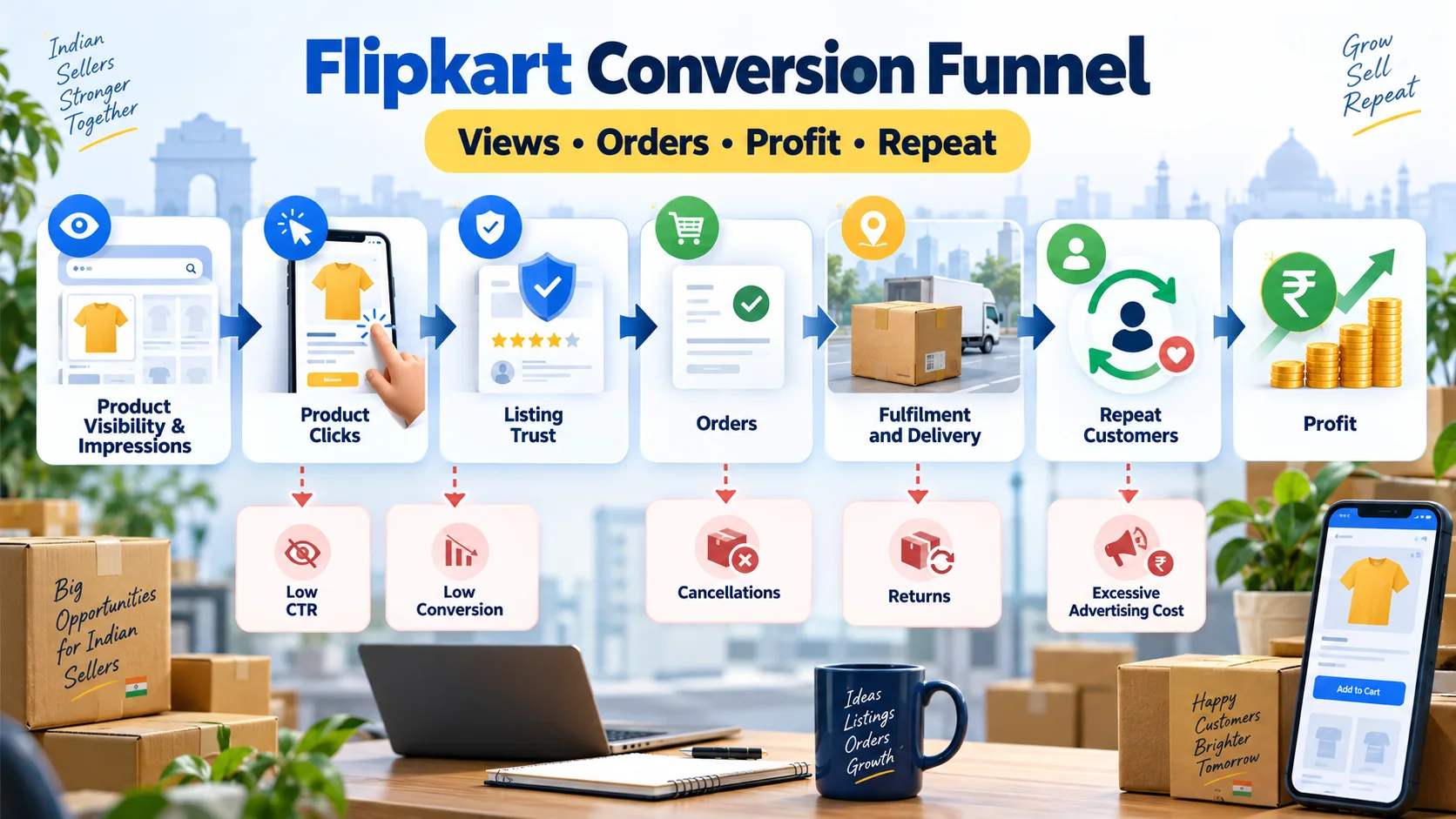
Flipkart Conversion Funnel कैसे सुधारें? Views से Profitable Sales तक Complete Guide
Flipkart पर impressions और clicks को profitable orders में बदलने की practical Hindi guide। CTR, conversion, cancellations, returns, ad ROAS, contribution margin और repeat demand को सही क्रम में समझें।
4 · Read blog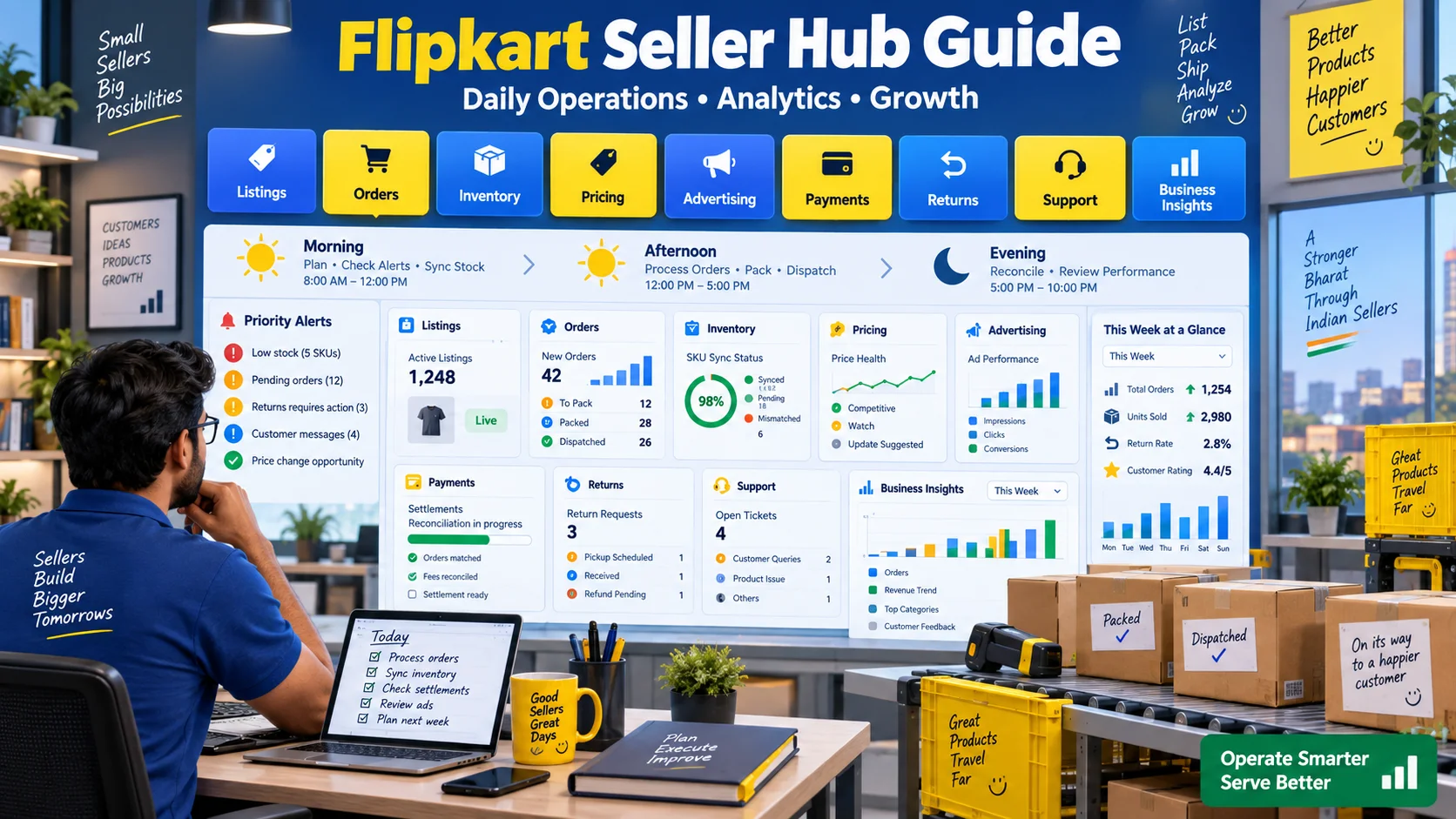
Flipkart Seller Hub Guide: Listings, Orders, Inventory और Analytics कैसे Manage करें?
Flipkart Seller Hub को daily business command centre की तरह कैसे use करें? Listings, orders, inventory, pricing, Ads, payments, returns, support और business insights के लिए practical daily, weekly और monthly workflow आसान हिंदी में समझें।
4 · Read blog
Comments 0
No comments yet. Be the first to share a useful thought.
Leave a comment
Your email address will not be published. Comments are reviewed before appearing. Web addresses are displayed as plain text and are never clickable.